Showing posts with label News - Washington. Show all posts

Monday, January 20, 2014

Jurors Have a Hard Time Resisting Call of the Web

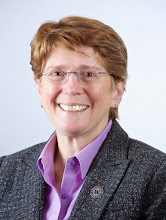
After a five-week trial, Judge Mary E. Roberts

Judge Mary E. Roberts (UW Law '84)
Photo from King County Superior Court
faced a tough decision: after learning that the jury foreman defied her instructions not to research legal issues on the Web, should she let the verdict stand or declare a mistrial?

The juror had looked up the penalty for first-degree rape—but in criminal trials, the juror is supposed to focus on the definition of the crime, not the penalty. The judge decided that the jury had been sufficiently tainted by the juror's action that a new trial was warranted.

The Seattle Times has a long story about this case and the nationwide issue of jurors leaving the jury room via wireless technology. Ken Armstrong, Case of the Curious Juror: When the Web Invades the Courtroom, Seattle Times, Jan. 18, 2014.

As people increasingly carry around Internet access in their pockets and reflexively look up actors on IMDb, rate restaurants on Yelp, and settle trivia disputes with a quick look at Wikipedia, the use of the web by jurors has challenged judges, advocates, and parties nationwide.

The Washington Courts created (with private funds) a poster for jury rooms reminding jurors to "FOCUS ON THE COURTROOM." (Here's the press release about it.)
Washington Courts poster
Jury instructions include cautions about outside research. See WPI 1.01 (civil trials) and WPIC 1.01 (criminal trials):
It is essential to a fair trial that everything you learn about this case comes to you in this courtroom, and only in this courtroom. You must not allow yourself to be exposed to any outside information about this case. Do not permit anyone to discuss or comment about it in your presence, and do not remain within hearing of such conversations. You must keep your mind free of outside influences so that your decision will be based entirely on the evidence presented during the trial and on my instructions to you about the law.
Until you are dismissed at the end of this trial, you must avoid outside sources such as newspapers, magazines, blogs, the internet, or radio or television broadcasts which may discuss this case or issues involved in this trial. If you start to hear or read information about anything related to the case, you must act immediately so that you no longer hear or see it. By giving this instruction I do not mean to suggest that this particular case is newsworthy; I give this instruction in every case.
During the trial, do not try to determine on your own what the law is. Do not seek out any evidence on your own. Do not consult dictionaries or other reference materials. Do not conduct any research into the facts, the issues, or the people involved in this case. This means you may not use [Google or other internet search engines] [internet resources] to look into anything at all related to this case. Do not inspect the scene of any event involved in this case. If your ordinary travel will result in passing or seeing the location of any event involved in this case, do not stop or try to investigate. You must keep your mind clear of anything that is not presented to you in this courtroom.
For more on the impact of the web on litigation, see these articles by UW Law students from the last few years:
See also the Jurors & Courtrooms page in the Social Media & the Courts section of National Center for State Court.

Want more? Just take out your smartphone and run a search. (But not while you're on a jury.)

Thursday, June 6, 2013

Drug Dogs Going Back to School

cartoon of dog sitting at school deskReflecting the change in Washington State law making it legal for adults to possess small amounts of marijuana and use it in private, some law enforcement agencies are retraining their drug-sniffing dogs not to alert for marijuana.

Local stories include:

The Washington State Criminal Justice Training Commission has standards for certifying dogs with different specialties (patrol, explosives, narcotics). As of January, narcotics dogs will be trained to detect cocaine, crack cocaine, methamphetamine, and heroin, but not marijuana.


The Supreme Court has issued two dog-sniff cases this Term. In Florida v. Harris (Feb. 19, 2013), the Court unanimously upheld the admission of evidence found in a truck after an alert by a trained dog (who had previously been reliable). SCOTUSblog's summary of the case is here. In Florida v. Jardines (March 26, 2013), the Court found that using a drug-sniffing dog on the defendant's front porch was an illegal search. See Adam Liptak, Justices, Citing Ban on Unreasonable Searches, Limit Use of Drug-Sniffing Dogs, N.Y. Times, March 26, 2013.

Narcotics dogs do not always perform accurately. In fact, a study of Chicago-area traffic stops by the Chicago Tribune found that drugs were found in just 44% of the vehicles where dogs alerted—and in only 27% of the vehicles with Hispanic drivers. Dan Hinkel & Joe Mahr, Tribune analysis: Drug-sniffing dogs in traffic stops often wrong, Chi. Tribune, Jan. 6, 2011. An academic study about the same time "found that detection-dog/handler teams erroneously 'alerted,' or identified a scent, when there was no scent present more than 200 times — particularly when the handler believed that there was scent present." Explosive- and drug-sniffing dogs' performance is affected by their handlers' beliefs, UC Davis Health System, Feb. 23, 2011. The paper is: Lisa Lit et al., Handler Beliefs Affect Scent Detection Dog Outcomes, 14 Animal Cognition 387 (2011). 

The current issue of the Oregon Law Review (available free in PDF) is a symposium on drug policy. It includes Jane Bambauer, Defending the Dog, 91 Or. L. Rev. 1203 (2013). The author says "This short essay makes the uneasy case for the narcotics dog. Those in favor of U.S. drug enforcement presumably need no convincing, but this Article intends to address the concerns of skeptics who worry about unjust drug enforcement, or who believe that criminalization is just plain bad policy. Dogs are just the first generation of a new set of law enforcement tools that can help us divorce criminal investigation from the bias and discretion that comes with traditional policing." Id. at 1204.

Washington readers might be particularly interested in Michael Vitiello, Joints or the Joint: Colorado and Washington Square Off Against the United States, 91 Or. L. Rev. 1009 and Michèle Alexandre, First Comes Legalization, Then Comes What? Tips for Washington and Colorado to Help Break the Cycle of Selective Prosecution and Disproportionate Sentencing, 91 Or. L. Rev. 1253.

Graphic: mw

Wednesday, December 12, 2012

Mistrial After Everett Juror Does Online Research

A child sexual abuse case resulted in a mistrial after a juror went online to research the  concept of witness coaching and told his fellow jurors. The  prosecutor didn't want to put  the six-year-old victim through a second trial, so reduced the charges to resolve the case. Juror’s ‘research’ forced mistrial in child rape case, Herald.net (Everett), Dec. 12, 2012

The end of  the  article briefly discusses a mistrial that resulted from a juror refusing to return to court after a break in deliberations.

Wednesday, June 13, 2012

Yakima County increasing its focus on justice costs | Yakima Herald-Republic

Yakima County increasing its focus on justice costs, Yakima Herald-Republic, June 11, 2012.

A review panel—a federal magistrate judge, an attorney, and a businessperson—raised questions about the prosecutions:

While commissioners said they did not interpret the report as critical of departments, the panel did point to issues in the prosecutor's office, citing a rising number of trials while total felony filings have been declining. The report said Prosecutor Jim Hagarty should give his deputies more authority to settle cases.
The increasing number of jury trials is costing the county more money and a high acquittal rate suggests weaker cases are being taken to trial, the report said.

Monday, June 11, 2012

Access to Court Records

Two recent stories concern access to court records:

Sunshine Committee

Senator Adam Kline recently resigned from the state's Sunshine Committee (a/k/a the Public Records Accountability Committee), citing concerns about privacy. State Sen. Adam Kline leaves ‘Sunshine’ board, Olympian, June 11, 2012.

The committee is reviewing the hundreds of exemptions to disclosure in our states Public Records Act. Kline says that the committee has become dominated by press representatives, which favor disclosure, and doesn't have enough privacy advocates.
The issue that sparked Kline's resignation involved juror questionnaires: The Freedom Foundation seeks access to them to find non-citizens and check whether they are registered to vote. The Freedom Foundation favors increased identification requirements for voters; Kline believes that the organization is trying to impede participation by likely Democratic voters. See Kline's statement; The Freedom Foundation's blog post.

Court Records
According to the state constitution and court rules, the public is supposed to have access to case files, with certain restrictions (e.g., Social Security numbers are kept private; files may be sealed under certain conditions). Reporters from the News Tribune set out to test how it works. They went to district and municipal courts—the courts where misdemeanors and small civil cases are handled—and, without saying they were reporters, asked to see recent misdemeanor files. In some courts, they were shown the files immediately, but in about half the courts in Pierce County they were given the runaround:

Some clerks said the cases were still “open” or “ongoing” and thus barred from public view. Some said only attorneys and defendants could view case records. Some said case files were confidential. Clerks in two courts – Sumner and Fircrest – insisted the only way to view case files was to pay for copies.  
Those answers were wrong. They contradict state rules that govern courts large and small. High-ranking legal leaders, including Barbara Madsen, chief justice of the state Supreme Court, said The News Tribune’s findings paint a picture that calls for correction and training.
Open courts, closed files: Hitting roadblocks in quest for public records, News Tribune (Tacoma), June 10, 2012.

Monday, February 27, 2012

Defendant Has Right to Be Present During All Jury Selection

A defendant is headed for a second trial for first-degree murder after his first conviction was reversed because he had not been present for all aspects of jury selection. Biker convicted in ‘no-body’ Ravensdale killing headed for new trial, SeattlePI.com, Feb. 26, 2012.

The Court of Appeals case is State v. Price, No. 63056-3-I, Justia link, Findlaw link (July 25, 2011). (The court also addresses a Rule 404(b) issue, saying that the trial judge was within her discretion to admit evidence of the defendant's membership in a biker gang.) The Court of Appeals applies a recent Washington Supreme Court case that examines the right to be present for jury selection under both the federal and the state constitutions. State v. Irby, 170 Wn. 2d 874, Google Scholar link (2011).

Tuesday, February 21, 2012

Judge again rebukes lawyers who want him to step down

Defense attorneys for the men accused of killing a corrections officer in Monroe asked the judge to step down because of his allegedly flawed understanding of the law and improper behavior in an earlier case. That's only part of the friction between the judge and the lawyers. Judge again rebukes lawyers who want him to step down from Byron Scherf’s trial, Herald (Everett), Feb. 11, 2012.

Jurors Excused Because of Views Toward Immigrants

In the Franklin County trial of a Mexican for allegedly killing his girlfriend, Judge excuses some jurors because of opinion about immigrants, Tri-City Herald, Feb. 14, 2012.

Public Defender Benefits (King County), Staffing (Skagit County)

Two public defender news items:

A recent class action lawsuit resulted in a ruling that King County public defenders, although termed contractors, are basically employees and should be covered by the state's pension plan. Dolan v. King County, 172 Wn.2d 299, legalwa.org link (2011). See State Supreme Court Rules Public Defenders Deserve Pensions; Seattle Times Editorial Board Embarrasses Itself, Seattle Weekly, Aug. 23, 2011. Now a bill (EHB 2771) seeks to limit the reach of the ruling. Kevin Dolan Lawsuit Over State Benefits for Public Defenders Sparks Controversial Bill, Seattle Weekly, Feb. 21, 2012.

The ACLU of Washington represents three defendants in Skagit County who claim that the public defense provided there is inadequate. The ACLU reports Court Hears Lawsuit over Public Defense System that Fails to Represent Poor People, Feb. 14, 2012. See also Public Defense Almost Non-Existent in Burlington, Mount Vernon, Claims Lawsuit, Seattle Weekly, Feb. 16, 2012.  The case is Wilbur v. City of Mount Vernon, No. C11-01100 (W.D. Wash.). The ACLU has posted two of the plaintiffs' motions.

Tuesday, January 10, 2012

Hiding Tattoos?

In pretrial motions, lawyers argued over whether the jury should be allowed to see Michael Coombes's tattoos – one on his face with A-F (for Aryan Family) and one on his hip with a gun and a syringe; the gun was the same brand and caliber as the murder weapon. Murder suspect hopes makeup will hide criminal history from jury, KXLY (Spokane), Dec. 12, 2011.


One issue was whether revealing the tattoos would also reveal the fact that the defendant was serving time in prison for the murder when he got them. He was getting a new trial because he had successfully argued that his guilty plea should be invalidated because of a misunderstanding of how time off for good behavior would be calculated. In re Coombes, 159 Wash.App. 1044, 2011 WL 240687 (Wash.App. Div. 3 2011) (unreported). The jury did learn of the hip tattoo (but I'm not sure if they saw it). Closing arguments heard in Coombes murder trial, KLXY, Dec. 16, 2011.

Coombes was convicted and received a sentence about 7 years longer than the sentence under the plea he had withdrawn. Jury convicts man of 2007 slaying, Spokesman-Review (Spokane), Dec. 19, 2011. By the way, the Spokesman-Review blog, Sirens & Gavels, has a number of posts tagged "neck tattoos": Coombes is not the only defendant who risks the jury forming an opinion of him based on his body art.

Sunday, December 4, 2011

News Tribune Investigates Kitsap-Pierce Drug Task Force

Today's News Tribune has an investigative report on WestNET, the West Sound Narcotics Enforcement Team, a federally funded drug task force based in Kitsap County, with tendrils reaching into Pierce County. A Dirty Little War, News Tribune, Dec. 4, 2011.

While the task force's mission is to go after drug-trafficking organizations, much of its effort was spent on low-level cases. Critics say that the officers often had a "cowboy" mentality, breaking down doors and bursting into homes wearing paramilitary gear.

The newspaper's review of court records indicates that the task force often inflated its success rate.

At least two people allege that one officer (Roy Alloway, who has since pleaded guilty to federal firearms and tax offenses) pressured them to give evidence that was false, or said that they made statements they did not.

In A story like WestNET's takes considerable work, News Tribune, Dec. 4, 2011, the journalists describe the public records they used, from courts (federal and state) and law enforcement agencies. The Tahoma Narcotics Enforcement Team (TNET), based in Pierce County, presents a different picture. All of its cases went to federal court, while most of WestNET's cases went to federal court. TNET has a much higher success rate (although the journalists did not have a record of cases the prosecutors declined. How WestNET compares with Pierce County task force, News Tribune, Dec. 4, 2011.

If you'd like to read about a drug task force gone horribly wrong, I recommend Nate Blakeslee, Tulia: Race, Cocaine, and Corruption in a Small Texas Town, HV8079.N3 B55 2005 at Good Reads. While focusing on one notoriously bad case – with a renegade officer at the center of the action – Blakeslee also discusses the structural factors that make drug task forces susceptible to abuse of power, sloppy police work, and worse. See chapter 11, The Jump Out Boys.

Thursday, December 1, 2011

Spokane Judge Won't Approve Plea without Seeing Prosecutor

Spokane County prosecuting attorney Steve Tucker personally negotiated a plea agreement with a defendant who shot a gun into a neighbor's house. The judge wanted to ask him some questions about it, but he chose not to appear, sending one of his assistants. The judge said she wouldn't approve the plea. Prosecutor Rankles Judge Spokesman Review, Nov. 26, 2011.

Friday, November 25, 2011

Second Trial in Civil Sex Abuse Case Because of Juror Misconduct

A Shoreline pediatrician will have a second trial in a civil case brought by young men who allege he engaged in improper sexual conduct with them when they were minors. The doctor admits to much of the conduct but says it was a legitimate part of his mentoring the boys.

Originally there were thee cases filed by four young men and their families. The cases were consolidated. The jury ordered the doctor to pay damages to three young men and their families, but the sum was much lower than the plaintiffs had sought. Now two of the plaintiffs have withdrawn from the suit.

The retrial follows juror misconduct in the first trial:

  • a juror failed to disclose that she and her husband had been sued for medical malpractice;
  • a juror told other jurors about her experience of sexual abuse but had not disclosed it during voir dire;
  • jurors shared newspaper stories and watched television news about the case.
Noted Pediatrician Accused of Preying on Patients Faces Jury ‐ Again, Seattle PI, Nov. 22, 2011.

The Court of Appeals opinion upholding the trial court's declaration of a mistrial is Kuhn v. Schnall, 155 Wn. App. 560 (2010) Legalwa.org link.

Monday, October 10, 2011

Judge Wants Attorneys to Behave

As Jay Mehring's case against Spokane and the city's chief of police for defamation and wrongful termination approaches its trial date, the judge says she is "sick of" the attorneys' behavior:

Spokane County Superior Court Judge Kathleen O'Connor had choice words Thursday for attorneys on both sides of the Jay Mehring civil case.
* * *
She ordered attorneys Bob Dunn and Ellen O'Hara to appear before her this afternoon "no matter what" with an agreed upon statement in the case and a list of issues that are in dispute and issues that aren't.

She threatened to hold the lawyers in contempt if they weren't able to do so "because I am sick of this."

The judge also warned that she would have no time to look at motions for reconsideration, "so assume that they're all going to be denied."

* * *

The judge also picked up a report she said had been submitted that morning in violation of a previous order.

"See this? The one I got today? In the waste basket!" she said, holding up the waste basket.
Judge Calls Mehring Case 'Dysfunctional,' Spokesman Review, Oct. 7, 2011.

Wednesday, June 22, 2011

Skagit County suit claims public defenders too busy to defend

A class action suit against the cities of Mount Vernon and Burlington claims that the attorney with the contract to handle public defense of misdemeanor cases has such a high caseload that it violates defendants' right to counsel. Skagit County suit claims public defenders too busy to defend | Seattle Times Newspaper, June 20, 2011.

Public defenders suing Seattle

After 40 years, The Defender Association's contract with the City of Seattle was not renewed, going instead to Northwest Defenders Association. TDA is challenging the decision, because the other group's lower bid was adjusted (at the city's request) to be higher than TDA's. Public defenders suing Seattle | Seattle Times Newspaper, June 21, 2011.

Sunday, June 19, 2011

Gene Anderson, U.S. Atty, Prosecuted White Collar Crime, Neo-Nazis

Gene S. Anderson, who served as the U.S. Attorney for the Western District of Washington 1981-89, died on March 27, 2011. He was noted for his prosecutions of white collar crime, both in the King County Prosecutor's Office and then on the federal level. He also worked with his counterparts in other jurisdictions to convict 20 members of the Order, a neo-Nazi group. A memorial will be held Friday, June 24, at 4 pm in the U.S. Courthouse, 700 Stewart St. Gene S. Anderson: memorial to honor trailblazing prosecutor, Seattle Times, June 18, 2011.

Saturday, June 18, 2011

Churches Against ‘Jim Crow’

For many black congregations, this weekend’s celebration of Juneteenth will feature a special emphasis on exposing the racial biases of our nation’s criminal justice system.

Since attorney Michelle Alexander wrote The New Jim Crow: Mass Incarceration in the Age of Colorblindness, a network of churches has joined her in the fight against a criminal justice system that targets poor minority communities and locks up a disproportionate percentage of African American men.

The Samuel DeWitt Proctor Conference, a group of thousands of black churches involved in local and global social justice issues, is coming together for Juneteenth to galvanize faith-based action against the new Jim Crow that Alexander writes about in her book.
Catherine Newhouse, Churches Against ‘Jim Crow’ | Urban Faith, June 17, 2011.

See earlier posts on The New Jim Crow. See also the Gallagher Law Library (UW Law) guide, Race in the Criminal Justice System and the website for the state Task Force on Race and the Criminal Justice System.

Juneteenth is a celebration of African American freedom and accomplishment. The Washington State legislature declared:
The legislature recognizes that on June 19, 1865, Union soldiers landed at Galveston, Texas with news that the Civil War had ended and the slaves were now free; that this was two and a half years after President Lincoln signed the Emancipation Proclamation on January 1, 1863; that the end of slavery brought on new challenges and realities in establishing a previously nonexistent status for African-Americans in the United States; that racism and continued inequality is the legacy of slavery and acknowledging it is the first step in its eradication; and that since 1980 June 19th has been celebrated as Juneteenth across the United States as a day for people to come together in the spirit of reconciliation to commemorate the contributions of African-Americans to this country's history and culture.

The legislature declares that an annual day of recognition be observed in remembrance of the day the slaves realized they were free as a reminder that individual rights and freedoms must never be denied.

The legislature declares that an annual day of recognition be observed in remembrance of the day the slaves realized they were free as a reminder that individual rights and freedoms must never be denied.
Laws of 2007 ch. 61 § 1, codified at RCW 1.16.050.

Emotional Testimony in Murder-Rape Trial

The cover story in The Stranger describes in some detail the painful and moving testimony by a Seattle woman who was raped and stabbed and whose partner was raped, stabbed, and killed. The Bravest Woman in Seattle, June 14, 2011.

The reporter, Eli Sanders, has followed this case since the crime was committed, nearly two years ago. See his earlier feature stories: While South Park Slept: A Gruesome Murder, a Beloved Bar, and a Week on the Edge, The Stranger, July 28, 2009, and The Mind of Kalebu, Sept. 22, 2009. The second article describes incidents showing the mental instability and possible dangerousness of the defendant, Isaiah Kalebu.

Thursday, December 30, 2010

Defending Gary Ridgway

"The Green River Killer" killed dozens of women in South King County in the early 1980s. Despite intensive work by the King County Sheriff's Office, no one had been arrested. Until November 2001, when officers announced that they had him.

Defending Gary* picks up there, as Mark Prothero, a public defender away from his office, hears the rumor that someone has been arrested. One friend says that there's DNA evidence and speculates that Prothero will get the case, since he's "the DNA guy" in his office (Associated Counsel for the Accused).

Prothero became co-lead counsel, along with Tony Savage, a private lawyer whom the family hired. (Once Ridgway's house was sold to pay Savage's retainer, he was indigent and eligible for public defense.) The team eventually included eight lawyers, plus investigators and consultants.

With his client's permission to use confidential communications, Prothero tells a compelling story -- not just about a serial killer, but about how the legal team worked on his defense. Prothero was aided in his writing by Carlton Smith, an experienced journalist who had already written best-selling books about the Jon-Benet Ramsay case and even, years before, the Green River Killer case (The Search for the Green River Killer, 1991). And so the book has that page-turning, hard-to-put-down style of the best true crime writing.

What we don't have is a great courtroom drama. Why? Because this case never went to trial.

The prosecution has such good physical evidence on seven charged murders that the defense thought that the best way to save Ridgway's life would be to plea bargain to avoid the death penalty. And the prosecution had so little evidence on forty-some other murders that solving those crimes with Ridgway's confession would be worth the plea bargain.

And so defense and prosecution spent months observing detectives questioning Ridgway -- and the book gives a lot of detail about those interviews using official transcripts. Unlike the diabolically brilliant serial killers you sometimes see in movies, Ridgway was generally muddle-headed and inarticulate, but the detectives eventually got the details they needed to close a lot of cases and bring some closure to the families of the young women Ridgway had killed.

The handling of this mammoth case -- by prosecution, defense, and presiding judge -- was so good that the King County Bar Association honored all: Outstanding Lawyer: Prosecution and Defense Teams in the Gary Ridgway Trial, Bar Bull., June 2004; Outstanding Judge: Honorable Richard A. Jones, King County Superior Court, Bar Bull., June 2004.

Ridgway was in the news again last week: Auburn skull, bones ID'd as likely Green River victim, Seattle Times, Dec. 23, 2010. The newly discovered victim, Rebecca Marrero, was not among the 48 murders covered by Ridgway's guilty plea.

This book is in our Good Reads collection. As should be obvious, "Good Reads" doesn't mean "happy topics." It does mean interesting, compelling books, often on important issues, and this one fits the bill.

* Defending Gary: Unraveling the Mind of the Green River Killer, by Mark Prothero with Carlton Smith (2006), HV6533.W2 P76 2006 at Good Reads.
The publisher's page for the book includes a free excerpt.