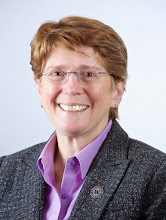
Former Alabama Supreme Court Justice Sue Bell Cobb decries the effect of money on judicial campaigns: I Was Alabama's Top Judge. I'm Ashamed by What I Had to Do to Get There. Politico, March/April 2015.
Wednesday, March 18, 2015
Big-Dollar Judicial Campaigns
Friday, March 28, 2014
Alaska Bill Would Allow Jury Nullification
A House bill promoting the notion that jurors can ignore Alaska's criminal code and let a lawbreaking defendant off the hook had a brief hearing Wednesday in the House Judiciary Committee, then was held for later. The bill, fostering "jury nullification," has been a bipartisan favorite of some Fairbanks-area House members, with identical versions introduced in 2002 and 2009.Richard Mauer, House bill pushed by Fairbanks lawmakers promotes ‘jury nullification', Anchorage Daily News, March 26, 2014.
H.B. 315 is here. The bill information page has more links. The sponsor, Rep. Tammie Wilson, states:
Before one is able to understand why jury nullification is a good idea, one must understand the importance of a trial by jury. Our Founding Fathers considered them to be a powerful weapon in the war against tyranny. Thomas Jefferson wrote, “I consider trial by jury as the only anchor yet imagined by man, by which a government can be held to the principles of its constitution”. In the Federalist Papers, Alexander Hamilton wrote that trial by jury was the “very palladium of free government” and a “valuable check upon corruption”.
Given the strength of these opinions, then, it is no surprise that the denial of trials by jury was one of the foremost acts of despotism listed by Thomas Jefferson in the Declaration of Independence.
As for the concept that juries have not only the power but the obligation to nullify unjust rulings of a judge, John Adams wrote, “It is not only (the juror’s) right, but his duty … to find the verdict according to his own best understanding, judgment, and conscience, though in direct opposition to the direction of the court”.
Our Founding Fathers zealously defended this right and recognized that only an informed and empowered jury could effectively protect a defendant from the potentially harmful effects of autocratic judges. Jury nullification allows citizens to have the final say on what is fair in a court of law.
Therefore, I ask for your support of HB 315. Jury nullification is a good idea and one supported by Constitutional principles of freedom.Jur-E Bulletin from the National Center for State Courts reports:
The state attorney general's office opposes the bill, indicating it would lead to “unfair and disorderly trials.” Additionally, Doug Gardner, director of the Legislature's legal services division wrote a memo which expressed concern that the bill may not comply with U.S. Supreme Court precedent that "it is the duty of juries in criminal cases to take the law from the court, and apply that law to the facts as they find them to be from the evidence." Additionally, he wrote another memo comparing the provisions in House Bill 315 to New Hampshire Revised Statute 519:23-b, which is New Hampshire’s statutory authority for jury nullification.
The Fiscal Note Analysis prepared by the Department of Law includes some interesting commentary. It states:
Passage of this bill would result in more cases brought to trial by jury because even though the offender does not dispute that he or she broke the law, the offender could argue for the jury not to follow the law.
Wednesday, January 29, 2014
Rap Lyrics as Evidence of Crime
Should a jury hear (or read) violent lyrics written by a criminal defendant? Even if they were written years before the crime? The issue has come up in a number of cases, including one that was recently argued in the New Jersey Supreme Court (State v. Skinner).
Two professors argue that rap lyrics should be entitled to protection as artistic expression. Erik Nielson & Charles E. Kubrin, Rap Lyrics on Trial, N.Y. Times Jan. 13, 2014.
The lower judges disagreed: the majority remanded, holding that the admission of the lyrics was prejudicial; a dissenter would have upheld the admission of the lyrics, finding that the trial judge appropriately applied New Jersey's four-part test for admission of extrinsic "bad-act" evidence. State v. Skinner, No. A-2201-08T2 (N.J. Super. Ct. App. Div. Aug. 31, 2012). The opinions offer extensive analysis and factual context. The ACLU of New Jersey's amicus brief is here link to the organization's amicus brief.
While we Seattleites can be proud of our hometown rappers Macklemore and Ryan Lewis who won four Grammys and are white, it is clear that attitudes toward rap are tied to attitudes about young black men. Some commentary by bloggers and two radio programs:
- Scott H. Greenfield, The Rhyming Irrelevance of Rap, Simple Justice: A Criminal Defense blog, Jan. 14, 2014.
- Deborah C. England, Rap Lyrics in Evidence: Is it a Crime to Rhyme?, CriminalDefense.com (among other points, asks: why rap and not pop? what about "Helter-Skelter" by Paul McCartney?)
- Dan Brooks, New Jersey supreme court to consider admissibility of rap lyrics, Combat! ("oppositional culture for an occupied age"), Jan. 14, 2014.
- Rap, Race, Free Speech and Crimes, Basic Black (WGBH), Jan. 17, 2014 (panel discussion including professors of law, music, and writing)
- Rap Lyrics as Evidence, On the Media, Jan. 17, 2014. Transcript here.
Friday, December 27, 2013
U.S. Chamber Targets "Lawsuit Abuse"
The U.S. Chamber of Commerce is one of the strongest voices decrying what it says is Americans' overreliance on litigation, operating in part through its Institute for Legal Reform (ILR). ILR describes its work:
The U.S. Chamber Institute for Legal Reform (ILR) is the most effective and comprehensive campaign committed to improving the lawsuit climate in America and around the globe.ILR has just released its list of the Top Ten Most Ridiculous Lawsuits of 2013, with a lighthearted YouTube video mocking them.
ILR’s mission is to restore balance, ensure justice, and maintain integrity within the civil legal system. We do this by creating broad awareness of the impact of litigation on society and by championing common sense legal reforms at the state, federal, and global levels.
ILR’s approach is highly aggressive and pragmatic, focused on achieving real change in real time while laying the groundwork for long-term legal reform. ILR’s hallmarks are the execution of cutting-edge strategies and a track record of visible success.
Of course, the plaintiffs and their attorneys in those suits don't necessarily agree with the Chamber's assessment; a few are quoted in this National Law Journal story.
For a different perspective on civil litigation, see the American Association for Justice's Fighting for Justice pages.
You can also find scholarly assessments of the "litigation explosion," the "malpractice crisis," "tort reform," and so on. Here is a sampling of papers from SSRN:
- Thornburg, Elizabeth G., Judicial Hellholes, Lawsuit Climates, and Bad Social Science: Lessons from West Virginia (2008). West Virginia Law Review, Vol. 110, No. 3, 2008. Available at SSRN: http://ssrn.com/abstract=1123808
- Eisenberg, Theodore, U.S. Chamber of Commerce Liability Survey: Inaccurate, Unfair, and Bad for Business (September 9, 2009). Cornell Legal Studies Research Paper No. 09-029. Available at SSRN: http://ssrn.com/abstract=1470872
- La Fetra, Deborah, Freedom, Responsibility and Risk: Fundamental Principles Supporting Tort Reform. Indiana Law Review, Vol. 36, p. 645, 2003. Available at SSRN: http://ssrn.com/abstract=699624
- Hyman, David A. and Silver, Charles, Medical Malpractice Litigation and Tort Reform: It's the Incentives, Stupid. Vanderbilt Law Review, Vol. 59, p. 1085, 2006. Available at SSRN: http://ssrn.com/abstract=942995
- Eisenberg, Theodore, The Empirical Effects of Tort Reform (April 1, 2012). Research Handbook on the Economics of Torts, Forthcoming; Cornell Legal Studies Research Paper No. 12-26. Available at SSRN: http://ssrn.com/abstract=2032740
Saturday, July 13, 2013
Witness Testifying Via Skype
Weekend Edition this morning included this:
Witness in Zimmerman Case Testifies by SkypeListen here.
Two problems arise with the new technology: The witness's testimony in this case was interrupted by pranksters; and appearing via Skype may violate the constitutional right to face your accuser. Weekend Edition Saturday host Scott Simon talks with attorney John Hutchins about using Skype in criminal cases.
Friday, July 12, 2013
Judge Texts Hint to Prosecutor
A judge in Texas thought of a helpful line of questioning for the prosecution and texted a note to another prosecutor, asking her to pass it along to trial counsel. She did, but now regrets it. Judge texted during trial to help state, says ex-prosecutor, ABA Journal News, July 9, 2013.
Wednesday, July 10, 2013
Calling Home Is Expensive
Most prisons charge inmates such high rates that "a phone call from an inmate across town may be ten times more expensive than ringing a friend in Singapore," says the Legal Times blog. Now the FCC might do something about it. The agency is holding a day-long workshop today. FCC Tackles Cost of Prison Phone Calls, The BLT: The Blog of the Legal Times, July 10, 2013.
Thursday, May 9, 2013
Lawyers Who Defend Accused Terrorists
What's it like to defend a high-profile terrorism defendant? See: Ron Scherer, Lawyers who defend terror suspects have thankless task. Why do they do it?, Christian Science Monitor, April 30, 2013. Tamar Rebecca Birckhead, To Defend a Terrorist: Reflections on Reid, Tsarnaev & How I Got from There to Here, Juvenile Justice Blog, May 3, 2013. Birckhead, now a professor at the University of North Carolina, represented Richard Reid, the so-called "shoe bomber," when she was a public defender.
Thursday, September 13, 2012
Funding Needed to Keep Federal Civil Trials Running
Federal civil jury trials in the United States probably would grind to a halt if Congress fails to reach a budget deal and $600 billion in automatic spending cuts kick in next year, a leading federal judge said Tuesday.Judge: US civil trials at risk without budget deal, Seattlepi.com (AP), Sept. 11, 2012.
The federal judiciary's share of the cuts would be more than $500 million if Congress does not reach a budget deal by year's end to prevent some $1.2 trillion in spending cuts and tax increases from kicking in next year, Chief Judge U.S. Circuit Court of Appeals for the District of Columbia said.
Tuesday, March 20, 2012
Prosecutor Found to Have Commented on Case Using Alias
A New Orleans businessman being investigated by the local U.S. Attorney noticed that comments on the local newspaper's website seemed to show an insider's knowledge of the case. He hired a forensic linguist to analyze the comments, which were found to match the writing style of court filings from the prosecution. And now one of the prosecutors has admitted that he wrote the comments about the case (and others) using a pseudonym. 'Mencken1951' unmasked: It is federal prosecutor Sal Perricone, Times Picayune, March 15, 2012 (Nola.com). He has been recused from cases on which he commented, and the U.S. Attorney has asked the Department of Justice Office of Professional Responsibility to review his actions.
Hat tip: Ars Technica via Volokh Conspiracy.
Sunday, February 19, 2012
Suing for Privacy Invasion Would Cost Privacy
Plaintiffs in a class action against Facebook for using their names and pictures to advertise to their friends now want not to be the class representatives: they realize how intrusive discovery can be.
"I did not expect that every single post I had ever made on Facebook would be potentially rehashed in an interrogatory responses [sic] and deposition," [the plaintiff] said in court documents filed Monday. "Answering questions regarding my private posts or my decisions to click 'Like' buttons on certain pages or posts would subject me to embarrassment and invade my privacy."Facebook Privacy Plaintiff Wants Out of Class Action, Recorder, Feb. 16, 2012 (Law.com). How can counsel prepare their clients for litigation experience?
Hat tip: Lawyerology!
Monday, January 2, 2012
Inside an Interrogation of a Scared Teen
After a trial court judge suppressed a teenager's confession in her trial for smothering her infant, David Boeri, a reporter for WBUR, a public radio station in Boston, petitioned to get the DVDs or the interrogation. It took several months, but the judge issued an order in September, and in December, WBUR aired a two-part report, "Anatomy of a Bad Confession." Today, NPR aired a lengthy story (though not as lengthy as what WBUR aired). Here are links:
- David Boeri, How a Teen's Coerced Confession Set Her Free, All Things Considered, Jan 2, 2012
- David Boeri, Anatomy of a Bad Confession, Part 1, WBUR, Dec. 7, 2011
- Anatomy Of A Bad Confession, Part 2, WBUR, Dec. 8, 2011
- video – excerpts from the interrogation, plus recent interview with the defendant, Nga Truong, and reflections by the reporter, David Boeri.
- Commonwealth v. Truong, Feb. 25, 2011, the opinion suppressing the confession
- Boeri's motion seeking the recordings
- decision and order granting the motion
Wednesday, November 30, 2011
Ore. governor bans death penalty for rest of term
Ore. governor bans death penalty for rest of term, Seattle Times (via AP), Nov. 22, 2011.
Tuesday, November 1, 2011
Federal Sentencing News
There's a big new study of federal sentencing AND the federal government has begun reviewing the sentences of people serving time for crack cocaine offenses.
Study
Yesterday the United States Sentencing Commission submitted to Congress a huge (645 pages!) assessing the impact of statutory minimum mandatory sentences. Here are a few excerpts from the press release:
"While there is a spectrum of views on the Commission regarding mandatory minimum penalties, the Commission unanimously believes that certain mandatory minimum penalties apply too broadly, are excessively severe, and are applied inconsistently across the country. The Commission continues to believe that a strong and effective guideline system best serves the purposes of sentencing established by the Sentencing Reform Act of 1984.”The report is here. The executive summary is here.
. . .
The Commission also addresses the overcrowding in the federal Bureau of Prisons, which is over-capacity by 37 percent.
. . .
The report was undertaken pursuant to a directive from Congress to examine mandatory minimum penalties, particularly in light of the Supreme Court’s 2005 decision in Booker v. United States, which rendered the federal sentencing guidelines advisory.
. . .
- More than 75 percent of those offenders convicted of an offense carrying a mandatory minimum penalty were convicted of a drug trafficking offense.
- Hispanic offenders accounted for the largest group (38.3%) of offenders convicted of an offense carrying a mandatory minimum penalty, followed by Black offenders (31.5%), White offenders (27.4%), and Other Race offenders (2.7%).
- Almost half (46.7%) of all offenders convicted of an offense carrying a mandatory minimum penalty were relieved from the application of such penalty at sentencing for assisting the government, qualifying for "safety valve" relief, or both.
- Black offenders received relief from a mandatory minimum penalty least often (in 34.9% of their cases), compared to White (46.5%), Hispanic (55.7%) and Other Race (58.9%) offenders. In particular, Black offenders qualified for relief under the safety valve at the lowest rate of any other racial group (11.1%), compared to White (26.7%), Hispanic (42.8%) and Other Race (36.6%), either because of their criminal history or the involvement of a dangerous weapon in connection with the offense.
- Receiving relief from a mandatory minimum penalty made a significant difference in the sentence ultimately imposed. . . .
Crack Sentences
Crack Cocaine Case Review May Free Inmates, All Things Considered, NPR, Nov. 1, 2011.
Across the country on Tuesday, federal judges began reviewing the prison sentences of thousands of men and women jailed on crack cocaine charges. Many inmates could be released or see their sentences sharply reduced.
Congress voted last year to ease federal sentencing guidelines for crack cocaine. But a decision this summer to revisit old drug cases has sparked new controversy.
Monday, June 20, 2011
Prosecutor's Comments Questioned
The Washington State Supreme Court overturned a conviction this month because of the white prosecutor's remarks that black witnesses had not testified against the black defendant because of a purported code that "black folk don't testify against black folk." State v. Monday, No. 82736-2 (June 29, 2011), links to opinions on court's website: majority, concurrence, dissent. See Jennifer Sullivan, Seattle murder conviction tossed out over 'racist' comments, Seattle Times, June 9, 2011.
King County Prosecutor Dan Satterberg wrote a guest editorial apologizing for the comments. 'No-snitch' argument untrue, damaging to trust in law enforcement, June 16, 2011.
This statement is untrue and offensive. We know from experience that the "no snitch" ethic is not confined to any particular race or background. We see it commonly across a wide range of cases that we handle. On the other hand, we also see witnesses of all races and backgrounds participate fully in the criminal-justice system, fulfilling an important civic duty that keeps us all safe and protects our constitutional rights.
Compounding the error, the statement has the unfortunate and ironic effect of further eroding trust in the criminal-justice system. By decrying the "no snitch" ethic in this manner, the senior deputy prosecutor created yet another reason for some to believe that our justice system is biased and racist.
Now an appeal is arguing that the same deputy prosecutor (James Konat) made inappropriate comments in his closing argument in the trial of Sebastian Burns who was convicted with Atif Rafay of killing Rafay's parents and sister. Konat said that the crime was worse than a Middle East beheading of a U.S. citizen, a comparison the brief argues was an appeal to nationalism and prejudice. Prosecutor's comments cited in call for new Sebastian Burns trial | Seattle Times Newspaper, June 20, 2011.
Saturday, June 18, 2011
Churches Against ‘Jim Crow’
For many black congregations, this weekend’s celebration of Juneteenth will feature a special emphasis on exposing the racial biases of our nation’s criminal justice system.Catherine Newhouse, Churches Against ‘Jim Crow’ | Urban Faith, June 17, 2011.
Since attorney Michelle Alexander wrote The New Jim Crow: Mass Incarceration in the Age of Colorblindness, a network of churches has joined her in the fight against a criminal justice system that targets poor minority communities and locks up a disproportionate percentage of African American men.
The Samuel DeWitt Proctor Conference, a group of thousands of black churches involved in local and global social justice issues, is coming together for Juneteenth to galvanize faith-based action against the new Jim Crow that Alexander writes about in her book.
See earlier posts on The New Jim Crow. See also the Gallagher Law Library (UW Law) guide, Race in the Criminal Justice System and the website for the state Task Force on Race and the Criminal Justice System.
Juneteenth is a celebration of African American freedom and accomplishment. The Washington State legislature declared:
The legislature recognizes that on June 19, 1865, Union soldiers landed at Galveston, Texas with news that the Civil War had ended and the slaves were now free; that this was two and a half years after President Lincoln signed the Emancipation Proclamation on January 1, 1863; that the end of slavery brought on new challenges and realities in establishing a previously nonexistent status for African-Americans in the United States; that racism and continued inequality is the legacy of slavery and acknowledging it is the first step in its eradication; and that since 1980 June 19th has been celebrated as Juneteenth across the United States as a day for people to come together in the spirit of reconciliation to commemorate the contributions of African-Americans to this country's history and culture.Laws of 2007 ch. 61 § 1, codified at RCW 1.16.050.
The legislature declares that an annual day of recognition be observed in remembrance of the day the slaves realized they were free as a reminder that individual rights and freedoms must never be denied.
Tuesday, March 1, 2011
Jury Nullification Advocate With Court Pulpit Charged - NYTimes.com
A former chemistry professor is charged with jury tampering because of his activity handing out brochures outside courthouses, telling potential jurors that they have the right to ignore the law if they disagree with it. Jury Nullification Advocate With Court Pulpit Charged, NYTimes.com, Feb. 25, 2011.
Thanks: Maureen Howard.
Friday, February 11, 2011
Angry Jurors Hope to Give Acquitted Teen Their Jury Pay
The Cleveland Plain Dealer reports that the county prosecutor has brought cases against hundreds of people with very little evidence. In less than a year, judges acquitted 364 defendants mid-trial. In one recent case, the jury not only acquitted, but some of the jurors wanted to give their jury pay to the defendant if he got his GED. Angry Jurors Hope to Give Acquitted Teen Their Jury Pay - News - ABA Journal, Feb. 10, 2011.
Thanks: Maureen Howard.
Monday, January 17, 2011
Loans for Lawsuits: High Price, Little Regulation
The New York Times and the Center for Public Integrity (a nonprofit for investigative journalism in DC) took a look at the industry that lends money to plaintiffs until their settlements or awards come in. The interest rates are very high -- a $10,000 loan can become a $30,000 debt very quickly -- but the industry says they are justified because of the risk that the plaintiffs lose their cases. Others say the practice is abusive. See Benjamin Appelbaum, Lawsuit Loans Add New Risk for the Injured, Jan. 16, 2011.
Saturday, January 15, 2011
Judy Clarke: Loughner's Lawyer Defended the Unabomber - TIME
Judy Clarke has been appointed to represent a number of unpopular defendants: Ted Kaczynski (the Unabomber), Susan Smith, Zacarias Moussaoui, Timothy McVeigh, Eric Robert Rudolph. And now she has been appointed to represent Jared Loughner. See Judy Clarke: Loughner's Lawyer Defended the Unabomber - TIMEJan. 12, 2011; Loughner’s Lawyer Is Called a Master Strategist, N.Y. Times, Jan. 10, 2011.
For a very interesting account of the representation of Kaczynski, see Michael Mello, United States v. Kaczynski: Representing the Unabomber, in Legal Ethics Stories (Deborah L. Rhode & David Luban eds., 2006), KF306.A4 L43 2006 at Reference Area.