Yesterday Judge Michael Trickey (King County Superior Court) ruled that Naveed Afzal Haq, the man accused of killing one woman and wounding five in the Jewish Federation office on July 28, could have his own investigator at the scene. Natalie Singer, Judge: Haq defense can send own crime-scene investigator, Seattle Times, Aug. 9, 2006. Prosecutors and representatives of thew Jewish Federation objected. The Federation would like to have its staff have access to the offices again.
In an effort to reduce prejudicial pretrial publicity, Judge Trickey also granted a defense motion to prohibit the media from filming or photographing Haq while he has his hands or legs in shackles or is surrounded by sheriff's deputies. Id.
Columnist Susan Paynter discusses the range of opinion within the Jewish community about whether King County Prosecutor should seek the death penalty. Susan Paynter, Jewish community ponders whether Haq should face death, Seattle PI, Aug. 9, 2006.
It is unclear whether the incident can be prosecuted as a hate crime. Mike Carter, Charges: It may take more than hate to qualify as hate crime, Seattle Times, Aug. 1, 2006.
Filed in: Haq, Jewish-Federation, Trickey, King-County, experts, pretrial-publicity, hate-crimes, death-penalty, Paynter,
Wednesday, August 9, 2006
Pretrial Rulings in Haq Prosecution


Tuesday, August 8, 2006
DSHS Risk Manager
Today's Seattle Times has an obituary of Bernie Friedman, who was the risk manager for the Department of Social and Health Services (DSHS), "the state's most-sued agency." Lawyer helped state stem losses from DSHS suits, Seattle Times, Aug. 8, 2006.
Mr. Friedman had a varied career, serving in the Air Force as a meteorologist, working for a large firm, losing his job, starting a small firm with Phil Talmadge, working as a law clerk for Talmadge when he was on the Washington Supreme Court, and, finally, working at DSHS.
In 2003, Mr. Friedman insisted on defending at trial the case filed by Said Aba Sheikh, a teenaged Somali refugee who was beaten into a coma by four youths, including two living in a home where they were placed by DSHS. (One was in foster care; the other was in a dependency guardianship). The state lost, and the plaintiff was awarded a judgment of over $10 million. But this year the Washington Supreme Court reversed, finding that the state owes no duty to persons harmed by torious acts of dependent children. Aba Sheikh v. Choe, 156 Wash. 2d 441, 128 P.3d 574 (Feb. 16, 2006) (Owens, J.) Findlaw links: majority, concurrence, dissent.
Justice Chambers, in his concurrence, emphasized that the state could still be liable for its own negligence -- just not the torts of the children. Justice Sanders, dissenting, said that the state has a duty to place foster children with foster parents capable of controlling them. He emphasized facts in this case -- that the state knew of the boys' criminal records and gang activity, that it did not tell the foster mother, and that she had asked DSHS to place the boys elsewhere before the attack.
See also:
- High court wipes away $10.3-million award to beaten Somali refugee, Seattle Times, Feb. 16, 2006.
- Court says state isn't liable for crimes by foster kids, Seattle Times, Feb. 17, 2006.
- Editorial, Police or protect: the role of DSHS, Seattle Times, Feb. 17, 2006.
Update (Jan. 15, 2007): The Washington State Bar Association posthumously awarded Mr. Friedman its Local Hero award. Press release, Jan. 11, 2007.
Filed in: DSHS, Friedman, obituaries, torts, UW, Bailey, Talmadge
Cops in Dorms?
This spring, Judge David Frazier (Whitman County superior court) threw out two cases against WSU students arrested by WSU campus police in their dorms. He said that students have a resonable expectation of privacy in the hallways of their dorms. In one case, an officer in in the hallway smelled marijuana smoke coming from a room and got a warrant before entering the room, where he discovered marijuana in the defendant's purse. WSU police now say that they will no longer patrol the dorms. Here at the UW, campus police will continue to patrol at night. Police won't patrol dorm halls at WSU, Seattle Times, Aug. 8, 2006.
Filed in: police, 4th-amendment, colleges, WSU, UW, Frazier, Whitman-County
Glass Art Litigation
In a series on famed glass artist Dale Chihuly, today's installment discusses his copyright-infringement case against another glass artist. The Seattle Times: Chihuly Inc.: Chihuly turns up the heat on competing glass artists.
The copyright suit, filed in October in U.S. District Court, accuses glassblower Rubino, a longtime collaborator of Chihuly's, and businessman/artist Kaindl of collaborating in a scheme to make and sell knockoffs of Chihuly's work. Both have denied the allegations, and have filed counterclaims alleging that Chihuly is seeking to claim ownership of basic forms, shapes and colors that are fundamental to glassblowing.Filed in: art, copyright, Chihuly, Rubino, Kaindl
Schierman Motions
Judge Gregory Canova (King County Superior Court) has granted the defense motion to extend the time for the prosecutor to file notice of seeking the death penalty by 60 days in the trial of Conner Schierman for murder and arson. Judge Canova said that he needs more time to decide whether the release of investigative documents to KING-TV would prevent Schierman from receiving a fair trial. Defense attorney James Conroy is seeking an order preventing the further release of document. He is also moving for a change of venue. Natalie Singer, Judge to give papers' release further review, Seattle Times, Aug. 8, 2006.
Filed in: Schierman, Canova, Conroy, KING-TV, death-penalty, pretrial-publicity, press
Monday, August 7, 2006
Ethics for Judges
Ethics Essentials: A Primer for New Judges on Conflicts, Outside Activities, and Other Potential Pitfalls (Committee on Codes of Conduct, Judicial Conference of the United States, April 2006) is just what its title says (26 pp.).
Thanks again to BeSpacific.
Filed in: ethics, judges, Administrative-Office-for-the-US-Courts
RPC update
Last month, the Supreme Court adopted a set of changes to the Rules of Professional Conduct. Now WSBA's Special Committee for the Evaluation of the Rules of Professional Conduct (Ethics 2003 Committee) offers an overview for Washington attorneys. One notable change: now the rules have official comments. (Interestingly, at the same time the Evidence Rules dropped official comments.)
See also Peter Callaghan, State ethics code compels lawyers to keep secrets, News Tribune, Aug. 3, 2006. This article focuses on the rules relating to maintaining clients' confidences and candor toward the tribunal. UW note: The article quotes Prof. Tom Andrews.
The complete Rules of Professional Conduct and comments are available for download. The changes take effect Sept. 1.
Thanks to Lisa Kremer for the News Tribune link.
Filed in: rules, ethics, WSBA, UW, Andrews, confidentiality
Friday, August 4, 2006
Schierman Plea, Motions
Conner Schierman pleaded not guilty to aggravated first-degree murder (four counts) and arson for the incident in which four family members were stabbed to death and their house burned. Natalie Singer, Man pleads not guilty in deaths of four members of Kirkland family, Seattle Times, Aug. 1, 2006.
Schierman's defense attorney, James Conroy, moved to dismiss the charges, alleging prosecutorial misconduct when the Kirkland Police Department released about 300 pages of the case file to KING-TV. Conroy wrote that releasing the documents was
concerted and protracted effort by the news media, with the obvious and purposeful assistance of the state of Washington and the Kirkland Police Department, to try the case and convict Conner Schierman in the press before he was ever able to enter his initial plea.The Times reported:
In his response, Senior Deputy Prosecuting Attorney Scott O'Toole said that KING-TV, which obtained the documents through a public-information request, removed from its Web site the story and related photographs that referred to the documents and agreed not to run any more stories based on the material in the discovery.I went to KING's website, looking for some statement about removing the documents. Instead I found what appears to be the original story, Documents uncover more evidence in Kirkland murders, KING5.com, July 25, 2006:
He also said much of the information mentioned in the media was properly released in public documents days before KING-TV obtained the discovery evidence.
KIRKLAND, Wash. – New court documents exclusively obtained by KING 5 News uncovers more evidence in the Kirkland arson and murders case. . .(All I did was type "schierman" in the search box on KING's main page.) I did not see any photographs related to the file. (The PI's article covering the arraignment says that Conroy acknowledged that this motion was unlikely to be granted. Tracy Johnson, Kirkland man says he's not guilty of killings, arson, Seattle PI, Aug. 1, 2006.
Defense attorney Conroy also moved to extend the time limit the prosecutor's office (King County Prosecutor Norm Maleng) to decide whether to seek the death penalty. By statute (RCW 10.95.040), the prosecutor must file notice of seeking the death penalty within 30 days of the arraignment. The defense has moved for a 5-month extension -- i.e., making it 6 months.
As in many capital cases in Washington now, the defense will likely raise proportionality, since the death penalty was not imposed on Gary Ridgway, despite his pleading guilty to 48 counts of aggravated first-degree murder, because he cooperated with the prosecution in some unsolved murders.
Filed in: Schierman, Conroy, O'Toole, Maleng, King-County, prosecutorial-misconduct, public-records, KING-TV, press, death-penalty, homicide
Including Pets in DV Orders
Maine has passed a new law giving judges the power to include pets in protective orders in domestic violence cases. Saving Fido, ABA Journal eReport, Aug. 4, 2006.
A supporter estimates that 70% of the victims of domestic violence also have their pets threatened. Lawyer Anne H. Jordan, a former prosecutor and now a member of Maine's Animal Welfare Advisory Council, says that threatening to harm pets is a classic intimidation technique -- and often keeps victims of domestic violence from leaving their abusers for fear that a beloved dog or cat would be killed. Vermont, New York, and Illinois are considering similar legislation.
Since 2001 Maine has had a program -- a collaboration between an animal shelter and a domestic violence shelter -- to provide foster homes to pets of domestic violence victims.
See also
- New Maine Law Shield Animals in Domestic Violence Cases, New York Times, April 1, 2006.
- Safe Haven -- Maine shelters pets under domestic violence protection, DVM: The Newsmagazine of Veterinary Medicine, May 1, 2006.
The answer is: It was Legislative Bill 1881, signed by the governor March 27, 2006, Public Law, Chapter 510. What made finding it so hard was that the bill does not use the terms "protective order" or "domestic violence." The new provision was included in a bill with various other animal welfare provisions. And the only language that links it to domestic violence protective orders is the citation of the code section it amends -- 19-A M.R.S. section 4007 -- which now includes the phrase "N. Directing the care, custody or control of any animal owned, possessed, leased, kept or held by either party or a minor child residing in the household." You have to go to 19-A M.R.S. sec. 407 to find that A-M are subsections listing what can be in a DV protective order. Geez, it shouldn't be that hard to find a recent bill that's been in the news.
Thanks to Mary Hotchkiss for sending me today's story from the ABA Journal eReport.
Update: See also Law Shields Pets from Domestic Violence, USA Today, Aug. 23, 2006.
Update (March 14, 2007): Legislator Wants to Open More (Doggie) Doors to Courthouse, Recorder (Law.com), March 2, 2007.
Filed in: legislation, domestic-violence, protective-orders, animal-law, pets, dogs, cats, legal-research
Graphic by mw.
Justice Talking

NPR's Justice Talking explores a current legal topic each week. You can listen on the radio (see the list of stations) or online. You can also sign up for podcasts.
This week's program is Collecting DNA from the Accused: Will it Help or Hurt Law Enforcement? .
- Host Margot Adler interviews: Chauncey Parker, NY State Director of Criminal Justice (NY has a new mandatory DNA collection program) and Prof. David Kaye, Univ. of Arizona law school
- Barry Scheck, co-founder of the Innocence Project at Benjamin N. Cardozo School of Law, debates DNA lobbyist Chris Asplen.
- John Blythe reports on the case of Darryl Hunt, who was exonerated by DNA evidence
- Margot Adler interviews Dr. Lawrence Kobilinsky (John Jay College of Criminal Justice, CUNY) about "the CSI effect" and, finally, futurist Paul Saffo about DNA databanks and personal privacy.
- "Are Lawyers Necessary in All Cases?" (3/28/06)
- "Murder: Beyond the Blood and Gore" (2/20/06)
- "When Kids Commit Crimes: What's a Fair Sentence?" (3/15/06)
- "Should Sex Offenders Have Civil Rights?" (11/14/05)
- "Limiting Lawsuits" (11/16/04)
Thanks for the lead to WisBlawg.
Filed in: cool-websites, Justice-Talking, NPR, Adler, DNA, Parker, Kaye, Scheck, Innocence-Project, , Asplen, Hunt, Kobilinsky, CSI, Saffo, CLE
Graphic by mw.
Wednesday, August 2, 2006
15% of Civil Trials Appealed
A 15-page report, Appeals from General Civil Trials in 46 Large Counties, 2001-2005, from the Department of Justice Bureau of Justice Statistics says that about 15% of civil trials are appealed. Plaintiffs and defendants are about equally likely to appeal. Bureau of Justice Statistics Press Release, July 6, 2006.
Some statistics by type of case -- appeals are filed in:
- 11% of all tort trials
- 21% of trials involving contracts
- 24% of property trials
- 18% of medical malpractice cases
- about 33% of products liability cases
- 5% of automobile accident cases.
According to the report, the appeals process provides another opportunity for litigants in a sizeable percentage of cases to reach a settlement outside the court. Many appeals are withdrawn or dismissed because the parties reach settlement after the initial appeal is filed.Thanks: beSpacific.
Filed in: statistics, Justice-Department, appeals, empirical-studies
Asset Forfeiture Resources
Forfeiture Endangers American Rights (F.E.A.R.) is a nonprofit group "dedicated to the reform of federal and state asset forfeiture laws to restore due process and protect property rights in the forfeiture process."
It makes some handbooks and documents available free on its website; others are available for sale in print or online to subscribers.
In response to FEAR's FOIA requests, the Department of Justice released
the 2006 versions of: Selected Asset Forfeiture Statutes, Money Laundering Statutes and Related Materials, and the DOJ Asset Forfeiture Policy Manual. These manuals are hot off the presses -- the two compilations of statutes (both of which include what appears to be a complete collection of every relevant federal statute on the subject -- and some very useful tables and "related material") were published in May 2006.FEAR plans to scan them and sell them in PDF -- with FEAR commentary -- on CD-ROM.
Thanks to beSpacific for the lead.
Filed in: asset-forfeiture, FEAR, criminal-law, Justice-Department
Nicknames for Bank Robbers
This morning's Seattle Times has a piece about how Catchy nicknames help FBI snare bank robbers.
Because robbers move so quickly, typically spending less than 20 seconds inside a bank, it's not uncommon for the FBI to receive shoddy surveillance video, vague descriptions and little physical evidence, [FBI Special Agent Larry] Carr said. By having nicknames, he hopes descriptive details will stick with people so that, if they see an alleged bank robber, they can identify them.Examples in the article included "Attila the Bun," "the Button-Up Bandit," and "the Uncle Fester Bandit."
Naturally I wondered about the legal angle. Is there ever an allegation that a suspect was prejudiced by the name? Does a nickname taint the defendant with uncharged crimes? Does the media attention a nickname brings prejudice the jury? What if the nickname ("the Redbeard Bandit") draws attention to one physical characteristic that results in a mistaken identification?
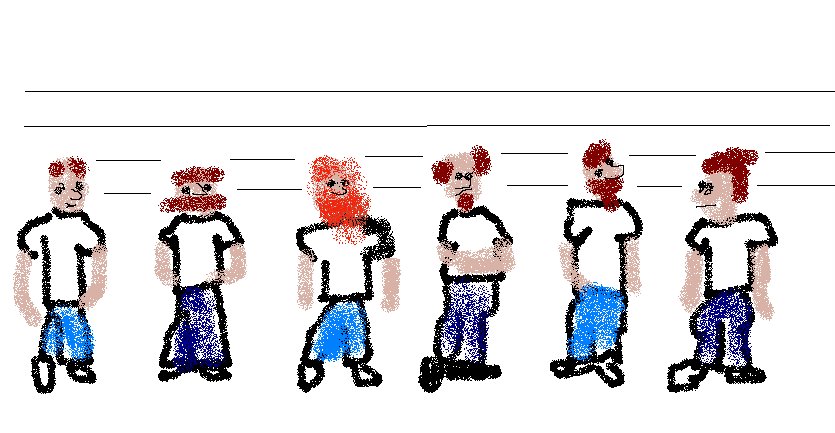
I did just a little research and didn't find much -- no ALR annotations, no law review articles. (There was an ALR annotation about whether it's prejudicial for a prosecutor to call a defendant names at trial "this monster," "a nightmare," etc. That's not the same.) Most of the cases with robber! within 3 words of nickname involve nicknames used by the robbers, not assigned by the FBI. For instance, a teller hears one robber call the other "Snake," and one piece of evidence against the defendant is that many of his buddies call him "Snake." United State v. Henderson, 241 F.3d 638 (9th Cir. 2000) upheld the conviction of "the Wig Bandit," but didn't discuss the name. (By the way, the defendant was identified by someone who saw "the Wig Bandit" featured on "America's Most Wanted.")
Since I didn't find anything in my quick search, maybe this isn't an issue. Any thoughts?
Filed in: FBI, nicknames, robbers, lineups
Graphic by mw.
Coughenour Profile
Judge John C. Coughenour (W.D. Wash.) is a well-respected judge, noted for his high standards for attorneys and compassion for criminal defendants, according to a profile in yesterday's Seattle Times. David Bowermaster, "Senior status" isn't likely to dilute judge's demanding, compassionate style, Seattle Times, Aug. 1, 2006.
When Judge Coughenour toured the new federal prison in Sheridan, Oregon, in 1989, a prisoner greeted him and Coughenour talked to him about prison conditions and his plans after his release. Since then, the judge has regularly visited the prison and offers to spend 15-20 minutes with anyone he has sentenced.
Judge Coughenour has spoken out against mandatory minimum sentences for drug offenses because they are often harsh and remove discretion from the judge.
Judge Coughenour has handled some high-profile cases, including the fraud trial of the Montana Freemen in 1998 and the trial of terrorist Ahmed Ressam.
The Times article doesn't mention it, but Judge Coughenour also chaired the Ninth Circuit Gender Task Force whose report, The Effects of Gender in the Federal Courts, was issued in 1993. I remember hearing him speak around then, and he indicated that his service on the task force had made a big impression on him. Having a white, Midwestern Reagan-appointee become an advocate for gender equity may have made an impression on others, as well: if he thinks there might be a problem here, well, then maybe there is!
UW notes: Coughenour was a full-time faculty member at the UW in the early 1970s, teaching Trial Practice (the predecessor to today's Trial Advocacy class). He has taught Advanced Trial Advocacy here as a part-time faculty member for years. (Sign up for it in winter 2007!) The Times profile quotes two Trial Ad instructors, private attorney Jeffery Robinson and federal public defender Thomas Hillier.
Filed in: Coughenour, judges, Robinson, Hillier, Ressam, Freemen, sentencing, prisoners, gender
Tuesday, August 1, 2006
National Sex Offender Public Registry
The Department of Justice hosts a National Sex Offender Public Registry. This site allows users to search sex offender registries from several states or all states at once. A statement cautions that information might be out of date or inaccurate.
Users must agree to conditions of use and are warned: "Any person who uses information contained in or accessed through this Website to threaten, intimidate, or harass any individual, including registrants or family members, or who otherwise misuses this information, may be subject to criminal prosecution or civil liability under federal and/or state law."
A year ago, this site was introduced with data from 22 states. (Press release July 20, 2005.) Now, with the addition of Florida and Oregon, all fifty states are included. (Press release July 3, 2006.)
I'm reminded of an essay I read in Legal Affairs by a person (a former flasher) who has to register as a sex offender. I was struck by this:
Why don't we register murderers? Drunk drivers? Batterers? People who have committed fraud?Robert J., Ex-Offender, Legal Affairs, Sept./Oct. 2003. I don't buy Robert J.'s apparent suggestion that sexual abuse is not "real abuse" -- but I do see his point. If we want to worry about people who could endanger us, the field is much larger than just sex offenders.
I can't understand why people think I need to know about the guy next door who might expose his penis to my daughters but I don't need to know about the guy who went into his last neighbor's driveway and beat her with a baseball bat. Or the guy who has a drunk-driving conviction and just might come driving home drunk one day and drive through my front yard, killing someone. It defies reason. I've read recent studies that say that sexual abuse constitutes around 10 percent of all child abuse. Where is the rampant emotional hysteria about the real abuse? Let's register the emotional and physical abusers.
Robert J. concludes by recommending that we register no one -- and that citizens understand that anyone can commit a sex offense. "Not understanding that and relying on a registry to target a few individuals is what puts you at risk." Id.
Food for thought.
Filed in: National-Sex-Offender-Public-Registry, sex-offenders, public-records
Monday, July 31, 2006
Hearing on Medical Liability
The Senate Committee on Health, Education, Labor, and Pensions held a hearing, Medical Liability: New Ideals for Making the System Work Better for Patients on June 22. The following witness statements are available online:
- David Studdert, Associate Professor of Law and Public Health, Department of Health Policy and Management, Harvard University School of Public Health -- Outlines "a series of problems with the performance of the medical liability system," presents "findings from a recent study by [his] research group," and discusses "some promising reforms, including ones currently before Congress, and their potential impact."
- Philip Howard, Founder and Chair, Common Good -- Advocates demonstration projects of administrative health courts. These courts would have administrative law judges who would specialize in health cases; neutral experts to advise the courts; a schedule to determine noneconomic damages; a "liberalized standard of recovery based on whether the injury should have been avoidable"; transparent procedures designed to resolve claims with minimal time and legal cost; connection to a regulatory department.
- William M. Sage, Professor of Law, Columbia Law School --
The existing malpractice system potentially compromises access to health care, reduces its quality, and increases its cost for three principal reasons. First, there is a two-sided mismatch between actual negligence and the threat or event of litigation. Many claims turn out not to be justified, but rates of medical error are disturbingly high, and most avoidable injuries go uncompensated.
Second, the process for resolving disputes is appalling. * * *
Third, conventional malpractice litigation, and conventional malpractice insurance, focus on individual physicians rather than the systems of care in which they practice. * * * - Richard Boothman, Chief Risk Officer, University of Michigan Health System -- Describes the University of Michigan's experience with changes in its claims processing.
In twenty two years of practice, not a single client ever asked me what they could learn from the cases I handled for them. Driven by that realization, I was convinced that the University could not only save money in the short run through smarter claims management, but reduce future patient claims by learning from our patients’ complaints.
- Susan E. Sheridan, Co-Founder, President, Consumers Advancing Patient Safety (CAPS) -- Recounts her family's experience with two significant medical errors and the resulting litigation.
- Cheryl Niro, American Bar Association, Standing Committee on Medical Professional Liability -- Opposes "health courts"; supports mediation, negotiated settlements when they are voluntary.
- Neil Vidmar, Russell M. Robinson II Professor of Law, Duke University School of Law -- presenting results of empirical research, challenges medical malpractice "myths"; opposes administrative health courts.

Filed in: legislation, med-mal, tort-reform, empirical-studies, apologies, mediation, negotiation, settlements, health-courts, administrative-health-courts, Studdert, Howard, Sage, Boothman, Sheridan, Niro, Vidmar, ABA
Graphic by mw.
Apologies and Early Settlement Offers
Some hospital systems and insurers have adopted policies of apologizing when medical mistakes have been made and acting quickly to settle. Evidence is emerging that the approach works. For instance, the University of Michigan started the policy in 2002 and has seen the number of claims drop each year; meanwhile, its time for processing claims and its litigation costs have been cut in half. Law.com - Emerging Med-Mal Strategy: 'I'm Sorry', Nat'l L.J., July 24, 2006. (Details of the Michigan study are in the chief risk officer's testimony before the Senate Comm. on Health, Education, Labor, and Pensions.)
An advocacy group promoting this approach is The Sorry Works! Coalition, whose website offers various fact sheets, links to news stories, and other information.
Many states, including Washington, have legislation that allows health care providers to apologize without having their apologies be admissible as evidence in a civil suit.
On the federal level, Senators Hillary Clinton and Barack Obama have introduced S. 1784, the National Medical Error Disclosure and Compensation Act (National MEDiC Act). According to the Congressional Research Service summary, the bill
Requires the Director of the Office to establish and maintain a National Patient Safety Database to receive nonidentifiable patient safety work product.The senators presented their position in the New England Journal of Medicine: Hillary Rodham Clinton & Barack Obama, Making Patient Safety the Centerpiece of Medical Liability Reform, 354 New Eng. J. Med. 2205 (May 25, 2006).
Requires the Secretary, * * * to establish the National Medical Error Disclosure and Compensation (MEDiC) Program to provide for the confidential disclosure of medical errors and patient safety events, reduce preventable medical errors, ensure patient access to fair compensation for medical injury due to medical error, negligence, or malpractice, and reduce the cost of medical liability for health care providers.
Requires Program participants to: (1) spend savings from the Program on reducing medical liability premiums or on activities to reduce medical errors; (2) report to a patient safety officer any medical error or patient safety event or any legal action related to the medical liability of a health care provider; (3) report to the patient any medical error that resulted in harm; and (4) offer to negotiate compensation with the patient and offer to provide an apology.
* * *
Requires the Director to analyze: (1) patient safety data to determine performance and systems standards, tools, and best practices for health care providers; (2) the medical liability insurance market to determine legal costs related to medical liability, factors leading to such legal costs, and the success of any state reforms; and (3) patient safety data to examine cases that were not successfully negotiated through the Program.
Filed in: apologies, settlements, med-mal, legislation, Clinton, Obama, Sorry-Works!-Coalition
Plaintiffs Attorneys Jockey for Backdating Cases
Dozens of civil suits have been filed against companies for backdating executive stock options. For more on this flurry of shareholder derivative actions, see Law.com - Plaintiffs Attorneys Jockey for Backdating Cases, N.Y.L.J., July 24, 2006.
Fees Cut for Incompetence
A federal judge denied an attorney's application for legal fees for his work on behalf of the plaintiff in settling a med mal case for $2.4 million. First, the judge found that the lawyer's application for $428,000 in fees and expenses was fabricated. Second, he said that even if the appeals court found no ethical misconduct, the lawyer should get no more than $100,000 "because of the 'grossly incompetent and inexplicable manner in which [he] conducted himself' after the settlement was reached." Law.com - Judge Denies Fee, Calls Legal Work 'Incompetent', N.Y.L.J., July 25, 2006.
"Over the last 21 years, I have overseen a fair number of infant's compromise cases, ranging from trip and fall cases to those involving serious brain damage with settlements reaching into the millions of dollars," Korman, the chief judge of the Eastern District, wrote in D.F. v. Mt. Sinai-NYU Medical Center Health Systems, 04-CV-1507. "The lawyers in those cases earned their fees by the settlements they achieved and by post-settlement work that Mr. Goldman failed to provide. I am not going to allow him to be compensated in the same way as attorneys who do their job."Id.
Filed in: attorney's-fees, settlements, ethics
More on the KPMG Attorneys Fees Issue
The controversy over KPMG and attorneys fees continues.
A little review: Accounting firm KPMG and some employees were being investigated for allegedly illegal tax shelters. KPMG cooperated with the investigation and, at the urging of the prosecutors (following the Dept of Justice's "Thompson Memorandum") capped its payment of attorneys fees for the employees under investigation. In the subsequent criminal prosecution of the employees, they said that Justice's pressuring KPMG to cut off their attorneys fees infringed their right to counsel. Judge Lewis Kaplan (S.D.N.Y.) agreed. He encouraged KPMG to pay and suggested the employees sue if KPMG did not pony up.
Now KPMG says Kaplan lacked jurisdiction. KPMG was not a party to the proceedings and didn't have an opportunity to cross-examine witnesses. In any event, the employees should be bound by their employment contracts, which specify that they must arbitrate all disputes with KPMG. On the other hand, Judge Kaplan says that arbitration might delay the start of their criminal trial. Law.com - KPMG Challenges Kaplan's Jurisdiction in Fee Dispute, N.Y.L.J., July 31, 2006.
Last week, "Kaplan, in United States v. Jeffrey Stein, S105 Crim. 0888, ruled that federal prosecutors coerced two ex-employees into giving statements at proffer sessions, and he refused to allow the government to use those statements at a trial scheduled for January." Federal Judge Finds KPMG Employees Coerced, Suppresses Statement, N.Y.L.J., July 28, 2006.
Filed in: Justice-Department, KPMG, attorney's-fees, Kaplan