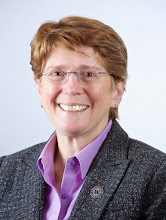
The University of Washington School of Law is presenting a half-day program on wrongful convictions and the prospect of compensation for the exonerated. Justice for Washington's Wrongly Accused? will take place Fri., Oct. 29, 2010, 1:30-5:00 p.m.
Jack Hamann, author of On American Soil: How Justice Became a Casualty of World War II, is the keynote speaker, followed by Lara Zarowsky, policy staff attorney, Innocence Project Northwest, and a panel of three Washington who were exonerated after being imprisoned for crimes they did not commit.
The program has been approved for 2.75 CLE credits. It is free, but registration is required.
Monday, October 18, 2010
Justice for Washington's Wrongly Convicted?


Judge and Parties OK with the Juror's Blog
A juror in Queens blogged about his experience, from waiting in the jury room, through the trial. Prof. John Clark, who teaches criminal justice at the Univ. of Texas at Tyler, came across the blog and alerted the court.A Juror’s Blog Chronicle Stirs an Age-Old Question, N.Y. Times, Oct. 17, 2010.
To Professor Clark, Mr. Slutsky’s blog posts clearly "crossed the line."
Jurors are not allowed to talk to one another about the case, "much less go on the World Wide Web and discuss it with everybody," he said.
No one involved in the case — the judge, the lawyers, the parties or Mr. Slutsky himself — found Mr. Slutsky’s blog entries troubling.
"I didn’t do anything wrong," said Mr. Slutsky, 61, of Flushing. "I didn’t blog about the actual case, just about the jury process. I specifically said in my blog that I’m not allowed to talk about the case."

Monday, October 11, 2010
Trial Tip from History (Lady Chatterly's Lover Trial, 1960)
We're coming up on the 50th anniversary of the trial of Penguin Books for publishing Lady Chatterly's Lover.
The prosecutor was Mervyn Griffith-Jones.
In his opening statement, he tried to defuse the antiquated impression he must have realized he made [in his wig and gown], assuring the jury they were not being asked to "approach this matter in any priggish, high-minded, super-correct, mid-Victorian manner."Tip: If you're trying to seem like a regular bloke, it's best not to assume that everyone has servants.
He went on to pose a series of rhetorical questions, the last of which, in the judgment of many commentators, doomed his case. Supporting this judgment is a document the defense had prepared, now in the Penguin archives. It is a list of the members of the jury and alternates, including their occupations. Among them were driver, cabinet fitter, dock laborer, teacher, dress machinist, none, housewife, butcher, and timber salesman. It is amusing to imagine the reaction of, say, Robert F. Bowman, the driver, as Griffith-Jones asked his questions:
"Would you approve of your young sons, young daughters -- because girls can read as well as boys -- reading this book? Is it a book you would have lying around in your own house? Is it a book you would even wish your wife or your servants to read?"
There was a titter in the courtroom, immediately silenced by the judge.
The trial, in late October and early November 1960, included testimony by writers, professors, ministers, and others. On November 4, the jury took just three hours to return a verdict of not guilty and the book sold briskly. This victory for the publisher "did not mark an immediate end of literary censorship in Britain" - but the climate changed soon after. Ben Yagoda recounts this historic trial in Trial and Eros, Am. Scholar, Autumn 2010.
Tuesday, October 5, 2010
Litigation Not Just About Winning
 Jules Lobel (Univ. of Pittsburgh and Center for Constitutional Rights) spoke yesterday afternoon on "Success Without Victory: Progressive Lawyering in an Era of Judicial Conservatism." He discussed not only his own career as a public interest lawyer but also the longer reach of history. Salmon P. Chase lost his cases on behalf of fugitive slaves before the Civil War, but the cases drew attention to the unjust situation and his arguments were published and circulated widely by abolitionists. Susan B. Anthony lost her case arguing for women's right to vote, but publicized her cause. Lobel says public interest lawyers should certainly try to win cases, but invites us to think beyond the outcome of any one case.
For more, see Jules Lobel, Success Without Victory Lost Legal Battles and the Long Road to Justice in America, K184 .L63 2003 at Classified Stacks. The publisher's description is here.
You might also be interested in this book Lobel edited: A Less Than Perfect Union: Alternative Perspectives on the U.S. Constitution, KF4550.A2 L47 1988 at Classified Stacks.
Saturday, October 2, 2010
Social Media in Court
The Conference of Court Information Officers conducted a nationwide study of how social media affects the administration of justice: New Media and the Courts: The Current Status and a Look at the Future (Aug. 26, 2010). It discusses these media:
- social media profile sites (Facebook, Myspace, et al.)
- microblogging (e.g., Twitter)
- smart phones, tablets, and notebooks
- monitoring and metrics
- news sharing (blogs, RSS feeds, etc.)
- visual media sharing (YouTube, Flickr, etc.)
- wikis
Some of the findings (lifted from the executive summary, pp. 9-10):
- About 40 percent of responding judges reported they are on social media profile sites, the majority of these on Facebook. This is almost identical to the percentage of the adult U.S. population using these sites.
- Judges who are appointed and do not stand for re-election were much less likely to be on social media profile sites. About 9 percent from non-elected jurisdictions reported they were on these sites.
- Nearly half of judges (47.8 percent) disagreed or strongly disagreed with the statement "Judges can use social media profile sites, such as Facebook, in their professional lives without compromising professional conduct codes of ethics."
- Judges appear to be more comfortable with using these sites in their personal lives, . . .
- More than half (56 percent) of judges report routine juror instructions that include some component about new media use during the trial.
- A very small fraction of courts (6.7 percent) currently have social media profile sites like Facebook; 7 percent use microblogging sites like Twitter; and 3.2 percent use visual media sharing sites like YouTube.
- A smaller proportion of judges than might be expected (9.8 percent) reported
witnessing jurors using social media profile sites, microblogging sites, or smart
phones, tablets or notebooks in the courtroom. - Almost all (97.6 percent) respondents agree that judges and court employees should be educated about appropriate new media use and practices.
 Prof. Anita Ramasastry has written commentaries on Findlaw about many aspects of social media in the courts:
- Facebook and MySpace Postings in Court: In a Lawsuit, Privacy Settings May Not Matter, Sept. 29, 2010 (discovery),
- Googling Potential Jurors: The Legal and Ethical Issues Arising from the Use of the Internet in Voir Dire, July 30, 2010,
- Why the Judge in the Casey Anthony Trial Was Right to Recuse Himself Due to His Remarks to a Blogger, May 6, 2010.
- A D.A. Puts Drunk Drivers on Twitter: Why The Policy Probably Won't Deter Future Offenders, Jan. 12, 2010.
- Should Courtroom Proceedings Be Covered Via Twitter? Why the Better Answer is "Yes", Dec. 29, 2009.
- Why Florida's Ban on Judges' "Friending" Lawyers on Facebook Is the Right Call, Dec. 15, 2009.
- Why Courts Need to Ban Jurors' Electronic Communications Devices, Aug. 11, 2009.
Tuesday, September 7, 2010
Irving Younger -- Still Teaching
 Irving Younger was a giant of trial advocacy -- professor (NYU, Cornell, Minnesota), practitioner, judge (City of New York, 1969-74). He was a masterful teacher and was famous for his lectures on evidence, discovery, and other topics.
Even though Younger died in 1988, he is still teaching, via recordings. See (and hear!) Trial Evidence Series (14 videotapes), KF8935 .Y68 1982 at Reference Area; The Ten Commandments for Cross-Examination (DVD), KF8920 T46 2000 at Reference Area.
Now the ABA Section of Litigation has published a book collecting a number of his speeches: The Irving Younger Collection: Wisdom & Wit from the Master of Trial Advocacy (Stephen D. Easton ed., 2010), KF213.Y68 E17 2010 at Classified Stacks. You can read his observations and tips on discovery, expert witnesses, scientific evidence, hearsay, jury selection, and cross-examination. You can also read his speeches on historic cases: Ulysses, Alger Hiss, and Erie.
The tone is casual, conveying messages through war stories, quips, and examples. Here's a passage I flipped to:
Lewis on cross-examination: "When this man jumped up on the running board, was he disguised in any way?"p. 258.
"No."
"What was he wearing?"
"What I've told you -- khaki pants and a T-shirt."
"By a T-shirt, do you mean man's underwear, cut pretty short at the arms?"
"Yes."
"Did you get a good look at those arms?"
"I sure did. One of those arms was holding a gun to my head."
"Was there anything unusual about that man's arms?"
"No."
And at that point, Lewis turned to DeSisto and said,"DeSisto, stand up. Take off your jacket." He took it off. "Roll up your sleeves." He rolled up his sleeves and there was an audible gasp in the courtroom because from wrist to shoulder, both arms were tattooed like the tattooed man in the circus. The government stipulated that DeSisto had been tattooed in that fashion at the age of 20 some odd; he was now well into his forties. And Lews sat down. That's it. What more can you do on cross-examination? You have raised a serious question not as to whether there was a hijacking, not as to whether somebody didn't jump up on the running board, but as to whether Wimpy has identified the man who did it correctly.
If you want to be a trial lawyer or if, like me, you're just interested in trials, The Irving Younger Collection is worth checking out.
Thursday, August 5, 2010
Magistrate Scolds Lawyers for Deposition Bickering
United States Magistrate Peggy A. Leen was faced with a 185 pages in which lawyers accused one another of behaving badly at depositions. They had behaved badly so she admonished them for it. But she also made it clear that she had better things to do than wade through hundreds of pages of tattling and whining. Mazzeo v. Gibbons, LV Police: Lawyers dressed down, Las Vegas Review-Journal, Aug. 3, 2010.
Judge Leen's order is here. Its conclusion:The exchanges related in excruciating, repetitive detail in the moving and responsive papers and their attachments were painful to read. If I was an elementary school teacher instead of a judge I would require both counsel to write the following clearly established legal rules on a blackboard 500 times:Judge Leen very clearly was fed up with these lawyers, but that last sentence is classy.I will not make speaking, coaching, suggestive objections which violate Rule 30(c)(2). I am an experienced lawyer and know that objections must be concise, non-argumentative and non-suggestive. I understand that the purpose of a deposition is to find out what the witness thinks, saw, heard or did. I know that lawyers are not supposed to coach or change the witness’s own words to form a legally convenient record. I know I am prohibited from frustrating or impeding the fair examination of a deponent during the deposition. I know that constant objections and unnecessary remarks are unwarranted and frustrate opposing counsel’s right to fair examination. I know that speaking objections such as "if you remember," "if you know," "don’t guess," "you’ve answered the question," and "do you understand the question" are designed to coach the witness and are improper. I also know that counsel’s interjection that he or she does not understand the question is not a proper objection, and that if a witness needs clarification of a question, the witness may ask for the clarification.Although these papers, and the conduct they relate, make me feel like a school marm scolding little boys, I am the judge whose duty it is to decide this motion. Accordingly, Mr. Kossack and Mr. Cannon are admonished for engaging in conduct which I know you know violates Rule 30(c)(2). You are better men and better lawyers than the conduct in which you have engaged illustrates.

Recusal Because of Remarks at Conference?
In a biotech case -- about the patentability of two breast cancer genes -- plaintiffs are asking the chief judge of the Federal Circuit to recuse himself, even before the panel is selected, because of remarks he made at a conference about the issue. Citing Possible Bias, ACLU Asks Rader to Recuse Himself in Myriad Case, Corporate Counsel (law.com), Aug. 5, 2010.
Monday, June 28, 2010
Howard on Prosecutors' Peremptory Challenges
 Professor Maureen A. Howard tackles the use of peremptory challenges in criminal cases. Taking the High Road: Why Prosecutors Should Voluntarily Waive Peremptory Challenges, 23 Geo. J. Legal Ethics 369 (2010), available on LexisNexis, Westlaw.
Using published studies and her own trial experience, Professor Howard questions the usefulness of peremptory challenges.
She moves on to explore the costs of their use: limiting the breadth of community participation and increasing the public's perception that lawyers are manipulating the system. She argues that prosecutors should voluntarily waive their right to use peremptory challenges.
Responding to potential concerns that giving up peremptory challenges would allow biased jurors to serve, Professor Howard says that the solution would be "a broader definition and application of a challenge for cause, not necessarily retention of the current peremptory challenge practice." (p. 415)
She concludes:
The use of peremptory challneges has questionable value and risks violating the constitutional rights of both defendants and prospective jurors. . . . Instead of waiting for judges and legislators to respond to the decades of criticism levied at the use of peremptory challenges and the narrow definition and application of for-cause challenges, the prosecutor should 'take the high road' and waive peremptories.
Can We Improve Judicial Selection in Washington?
 Unlike federal judges, who are appointed by the President with the advice and consent of the Senate, our state judges are elected by the people. But in practice, most of them are first appointed by the governor to fill mid-term vacancies and only face election if they are opposed at the end of their terms. There is very little public scrutiny of the appointment process, and when elections roll around, many voters don't have good tools for evaluating candidates. Professor William R. Andersen turns his attention to these issues in Judicial Selection in Washington -- Taking Elections Seriously, 33 Seattle U. L. Rev. 605 (2010), available on HeinOnline, LexisNexis, Westlaw.
Professor Andersen suggests that some problems cannot be fixed within the framework of our election system, but some can.
Some may decry big-money campaigns for judgeships, but Supreme Court precedent limits what can be done. And if there are to be elections, then judges will have to participate in campaigning -- raising money, giving speeches, and so on. To address problems resulting from this aspect of electing judges, Professor Andersen recommends revising the rules for recusal, and he says that "serious work is going on in professional bodies to make necessary revisions." (p. 609)
To make selection of judges more informed and transparent, Andersen urges "a borad-based and intentionally diverse citizen's commission charged with evaluating judicial candidates." (p. 614)
He also suggests regular, objective performance evaluations of judges, and he reports that systems for evaluating judges are being tried around the country (p. 612), citing the National Center for State Courts page on Judicial Performance Evaluation, which links to information from 18 states, including Washington. (By the way, the NCSC link is broken for Washington State's Walsh Commission Report, The People Shall Judge: Restoring Citizen Control to Judicial Selection (1996), but this link works. Prof. Andersen was a member of the Walsh Commission.)
Farewell to Stuart Scheingold, Scholar of Cause Lawyering

Stuart Scheingold, professor emeritus of political science and a leading scholar of law and politics, has died. Obituary: UW professor renowned for work on law, politics, Seattle Times, June 28, 2010.
"He was quite simply one of the world's leading commentators on law and politics," said Amherst College's Austin Sarat, a professor of jurisprudence and political science with whom Professor Scheingold directed the multivolume, internationally oriented Cause Lawyering Project.
Scheingold's works include:
- The Cultural Lives of Cause Lawyers (Austin Sarat & Stuart A. Scheingold eds. 2008), KF299.P8 C85 2008 at Classified Stacks
- Cause Lawyers and Social Movements (Austin Sarat & Stuart A. Scheingold eds. 2006), KF299.P8 C38 2006 at Classified Stacks
- The Worlds Cause Lawyers Make: Structure and Agency in Legal Practice (Austin Sarat & Stuart A. Scheingold eds. 2005), K118.P82 W67 2005 at Classified Stacks
- Something to Believe in : Politics, Professionalism, and Cause Lawyering (Austin Sarat & Stuart A. Scheingold eds., 2004), KF299.P8 S334 2004 at Classified Stacks
- Cause Lawyering and the State in a Global Era (Austin Sarat & Stuart A. Scheingold eds. 2001), K118.P82 C38 2001 at Classified Stacks
- Cause Lawyering: Political Commitments and Professional Responsibilities (Austin Sarat & Stuart A. Scheingold eds., 1998), K487.P65 Z92 1998 at Classified Stacks
- Stuart A. Scheingold, The Politics of Law and Order: Street Crime and Public Policy (1984), HV6789 .S32 1984 at Classified Stacks
- Stuart A. Scheingold, The Politics of Rights: Lawyers, Public Policy, and Political Change (1974), KF380 .S3 at Classified Stacks
Prof. Scheingold's faculty profile is here. In his honor, the Department of Political Science has the Stuart A. Scheingold Professorship of Social Justice (now held by Christopher Parker).
Photo from Seattle Times.
Wednesday, June 23, 2010
Decision Making in Settlement and Litigation
When attorneys and their clients decide whether to settle and for how much, they try to predict how things will turn out if they go to trial, hoping, of course, to do better. In a study of thousands of civil cases, researchers found that attorneys were very often wrong. Three-fifths of plaintiffs and a quarter of defendants got a result at trial that was worse than the settlement they could have had. The cost of the error was much greater for defendants: plaintiffs' average error was $43,100, but defendants' average error was $1,140,000. Randall L. Kiser, Martin A. Asher, and Blakeley B. McShane, Let’s Not Make a Deal: An Empirical Study of Decision Making in Unsuccessful Settlement Negotiations, 5 J. Empirical Legal Studies 551, 566 ((2008).  Now the lead author of that study -- a consultant and former litigator -- has written a book aimed at lawyers and law students to help them see the problem of bad decision making and learn ways to improve it. Randall Kiser, Beyond Right and Wrong: The Power of Effective Decision Making for Attorneys and Clients, K126.K57 2010 at Classified Stacks. The book presents research studies to support its recommendations. As the author puts it:
This book differs from other books and articles on settlement negotiations in that it places greater weight on scientific evidence than the war stories of attorneys, mediators and judges; it assumes that empirical studies are more instructive than anecdotes and statistics are more dependable than surmise.p. 5. But Kiser goes easy on his audience by presenting the social science without "probability theory, regression analysis, game theory," and so on "for a simple reason: attorneys generally don't like them, don't understand them and won't use them." So the book is a practical, how-to work backed by scholarship (but not weighed down by it).
It should be of interest for professional responsibility as well as trial practice and alternative dispute resolution.
Monday, June 21, 2010
People of Color Still Excluded from Southern Juries
The Equal Justice Initiative has released a study of eight southern states showing stark disparities in the representation of African Americans and Latinos on juries. Illegal Racial Discrimination in Jury Selection: A Continuing Legacy (June 2010). Take a look at least at the executive summary and recommendations -- you'll want to keep going to see more, including both statistical analysis and the the stories of the people excluded from serving and the people convicted by all-white juries.
One striking example (p. 28): An African American woman who had lived in a county for 10 years and worked in the same job for 6 years was excluded because she "had no ties to the community." Instead of shrugging and walking away, she returned to the courthouse daily to observe the trial, including the naps of some white jurors during testimony. After the black defendant was convicted, she visited him in prison and helped him with his successful appeal.
Bryan Stevenson, EJI's executive director, was interviewed on All Things Considered yesterday. Listen to the story (or read a summary) here.
Thursday, June 17, 2010
Can Arbitration Clause Block Consumer Class Action?
Cell phone companies -- and others -- often try to prevent consumer class actions by including provisions in contracts that the consumer will resolve any disputes individually in arbitration. But is there still a role for the consumer class action, pooling many consumers' small damages to get to a case that's worth litigating and will get the company's attention? See Alexander J. Casey, Arbitration Nation: Wireless Services Providers and Class Action Waivers, 6 Wash. J.L. Tech. & Arts 15 (2010).
The Washington Journal of Law, Technology & Arts is a new journal, replacing the Shidler Journal of Law, Commerce + Technology as part of a merger with the Law, Technology & Arts Group (LTA) a new interdisciplinary research unit at the UW law school. The Journal publishes concise legal analysis aimed at practicing attorneys. Do you have something to say about law and technology or the arts? The Journal accepts submissions from students, professors, and practicing attorneys.
Wednesday, June 9, 2010
Moot Court for Afghan Students
Despite the huge challenges posed by war, poverty, and disruption, law students in Afghanistan participated in this year's Philip C. Jessup International Law Moot Court Competition, supported by UW Prof. Jonathan Eddy and UW alumnus Mark Hough. Julie Case, Trials by Fire, Columns, June 2010.
King County judge charged over Knox letters
King County judge charged over Knox letters, SeattlePI.com, June 8, 2010.
Michael Heavey, a Superior Court judge who lives in West Seattle, is accused of violating the state's Code of Judicial Conduct by sending letters to three Italian judicial officials on Knox's behalf before her conviction in the murder of a fellow exchange student living with her in Perugia, Italy.
Tuesday, June 1, 2010
Divorce attorneys catching cheaters on Facebook - CNN.com
Divorce attorneys catching cheaters on Facebook - CNN.com
, June 1, 2010:
At least 80 percent of attorneys surveyed by the American Academy of Matrimonial Lawyers cited a growth in the number of cases that used social media over the last five years.It's not just infidelity, which isn't the big deal in divorce that it was a generation ago. It's also a variety of other lies -- "No, honey, I haven't started drinking again!" or "I can't pay child support because I'm broke" -- that can be skewered by a Facebook status or snapshot.
CSI New York -- in the 1920s and 1930s!

In The Poisoner's Handbook, Deborah Blum tells the human and scientific stories of poison and investigation in the 1920s and 1930s, focusing on New York City and two crusading scientists: Charles Norris, the city's first medical examiner, and Alexander Gettler, the head chemist in the ME's office.
This work mixes a couple of nonfiction genres: true crime and popular science. A couple is found dead: accident or murder? Several family members die: all victims of disease or were they poisoned? It takes pretty sophisticated science to tell -- science that Norris and Gettler had to develop as they went along.
There's also some interesting social history. In addition to working on individual crimes, the scientists advocated (not always successfully) for public health measures -- workplace safety, a stronger FDA (able to ban, for instance, "medicines" with radium), and an end to Prohibition-era poisoning of alcohol (see Blum's account in Slate).
Deborah Blum, The Poisoner's Handbook: Murder and the Birth of Forensic Medicine in Jazz Age New York (HV6555.U62 N373 2010 at Good Reads). Publisher's page.
Tuesday, May 25, 2010
Malleable Memories
 William Saletan of
Slate has begun an eight-part series on the work of famed memory researcher Elizabeth Loftus.
Part I, The Ministry of Truth, recounts a memory experiment Slate conducted: readers were shown photos of four actual news events and one faked event and asked to comment on what they remembered. Many "remembered" the events that never happened. Next they were told that four of the events were real and one was faked. Many chose one of the real events as the fake and continued to "remember" the false one.
Part II, Removable Truths, begins profiling Professor Loftus. Still to come:
- Part III, Leading the Witness
- Part IV, The Recipe
- Part V, Truth or Consequences?
- Part VI, The Road to Therapy
- Part VII, Training Humans
- Part VIII, The Future of the Past
For a deeper analysis of Loftus's work, see Do Justice and Let the Sky Fall: Elizabeth F. Loftus and Her Contributions to Science, Law, and Academic Freedom (Maryanne Garry & Harlene Hayne eds., 2006), BF109.L64 E45 2006 at Classified Stacks. One of the articles in this volume is Incorporating Elizabeth Loftus's Research on Memory into Reforms to Proect the Innocent, by Prof. Jacqueline McMurtrie, Director of the Innocence Project Northwest Clinic.
Friday, May 21, 2010
Female Advocates' Attire
 How should women dress when they appear in court for their clients? Conventional wisdom suggests conservatively: a sober suit with a respectable blouse. But Professor Maureen Howard, Director of the UW's Trial Advocacy Program, suggests that effective advocates need to be credible, and that might mean dressing to reflect one's own personality and tastes.
The biggest risk of adopting "off the rack" clothing advice is ignoring one's own sense of personal authenticity in dress and manner. In such a situation, the clothing "becomes a "costume," undermining the lawyer's credibility and emphasizing the "play within a play" aspect of trial work. . . . A lawyer who maintains her integrity in her dress and emeanor and is consistently genuine -- consistently herself -- is more likely to be perceived as credible and trustworthy.Maureen A. Howard, Beyond a Reasonable Doubt: One Size Does Not Fit All When It Comes to Courtroom Attire for Women, 45 Gonz. L. Rev. 209, 216 (2009/10), LexisNexis get 45 gonz l rev 209, Westlaw
Find 45 gonz l rev 209. Howard supports her argument with observations from her experience as well as citations to practice guides and scholarly literature.

Thursday, May 13, 2010
Not Guilty By Reason Of Insanity: Balancing Public Safety With Disability Rights
This morning Weekday on KUOW looks at Not Guilty By Reason Of Insanity: Balancing Public Safety With Disability Rights, interviewing King County Prosecutor Dan Satterberg and Gonzaga law professor Mary Pat Treuthart.
They discuss Wash. Laws of 2010, ch. 263, which establishes a public safety review panel to advise courts when the state mental hospital recommends the release of someone who had been found not guilty by reason of insanity.
Sunday, April 25, 2010
Innocence Project Clients from Clark County Freed
UW's Innocence Project Secures Two More Conviction Reversals, UW Law press release, April 22, 2010. Note links to other stories and video clips in sidebar.
Prosecutor Sleeps with Judge: Conflict of Interest?
Dahlia Lithwick writes about a distressing conflict of interest in a murder trial -- a conflict that does not seem to distress reviewing courts. Courting Disaster: The most outrageous thing about the Texas judge who slept with the prosecutor in a death-penalty case, Slate, April 24, 2010.
You don't even have to take a position on Hood's guilt, innocence, or the efficacy of the death penalty to recognize that when a judge and prosecutor are secret paramours, the integrity of the whole judicial system suffers.Thanks: Jennifer Wertkin
Corrected 6/25/10
Wednesday, April 14, 2010
Trial Advocacy Resources Guide
Check out our library's new Trial Advocacy Resources guide. It lists print, video, and online resources for developing skills and finding academic studies. It has links to national and Washington State professional organizations and local courts. And it has information about newsletters and blogs that can help you stay current.
I've added it as a link in the sidebar to the right, so you can find it again easily if you want to.
Sunday, April 4, 2010
Judge Franklin Burgess Dies
Judge Franklin D. Burgess, the second African American judge in the Western District of Washington, died last week. Gonzaga star Judge Franklin Burgess a genuine legend, Seattle Times, March 27, 2010.
Thursday, April 1, 2010
Court Requires Warning About Deportation Risk
Court Requires Warning About Deportation Risk, N.Y. Times, March 31, 2010:
The Supreme Court ruled on Wednesday that lawyers for people thinking of pleading guilty to a crime must advise their clients who are not citizens about the possibility that they will be deported.Padilla v. Kentucky, No. 08-651 (March 31, 2010) is here. SCOTUS Blog has links to other stories here.
Likening deportation to the punishments of banishment and exile, Justice John Paul Stevens, writing for five justices, said the Constitution guaranteed competent legal advice on at least some collateral consequences of guilty pleas.
“It is our responsibility under the Constitution to ensure that no criminal defendant — whether a citizen or not — is left to the mercies of incompetent counsel,” Justice Stevens wrote.
Monday, March 22, 2010
Bridging the Gap CLE
KCBA and WSBA YLD present Bridging the GAP 2010, a CLE that offers "Low-cost practical skills to help prepare new lawyers for success in their legal careers, regardless of practice area," Friday, March 26.
7:30-8:00am Registration and Coffee Service
8:00-9:00am 15 Key Elements of a Successful Law Practice - Ann Guinn, G&P Associates
9:00-10:00am Basic Rules of Motion Practice - Lisa M. Marchese, Dorsey & Whitney LLP
10:15-11:30pm Transactions and Litigation - Brian C. Park, Dorsey & Whitney LLP; David M. Byers, Starbucks Corporation
11:30-12:30pm Top 10 Reasons Lawyers Get Sued - Colin J. Folawn, Schwabe Williamson & Wyatt; Christopher H. Howard, Schwabe Williamson & Wyatt
12:30-1:30pm Lunch Provided
1:30-3:00pm Effective Legal Writing from the Judicial and the Law Firm Perspective - The Honorable Elaine Houghton, Washington Court of Appeals; Robert C. Cumbow, Graham & Dunn PC
3:15-4:15pm Ethics and Professionalism - Irene Leonard, Coaching for Change; Molly Kenny, Law Offices of Molly B. Kenny
4:15-5:00pm Negotiation and Mediation - Jeff Bean, Beyond the Courthouse Mediation; Rina Goodman, Transforming Conflict, LLC
5:00-6:00pm Networking Social Hour
This is a bargain -- $95 for attorneys and just $25 for students (limited spaces available).
This program sold out last year, and the student spaces are limited, so register soon!
Thursday, March 18, 2010
Banished
A new book by two UW faculty members explores geographic restrictions that are placed on people in the city -- often homeless people and people of color. Katherine Beckett & Steve Herbert, Banished: The New Social Control in Urban America (2007).
The book would be interesting and important for anyone concerned about the law and the urban poor, but it's especially interesting locally because the city the authors study is Seattle. They use a variety of sources: records from the police and the courts, archives from the city council, interviews with prosecutors, defenders, and judges, and -- most vividly -- interviews with people who are subject to the restrictions. SOAP and SODA aren't just items on a shopping list: they're tools for restricting where an individual may go in Seattle. Very often probation (or a deferred sentence) for a minor offense includes an order to Stay Out of Areas of Prostitution (SOAP) or to Stay Out of Drug Areas (SODA). Hundreds of people are also given trespass admonishments, with orders not to go to one or many parks or not to go to one or many businesses.
Violating these orders subjects a person to arrest, trial, and jail. And yet obeying the orders often isolates the person from his or her community and makes it difficult to get social services, and so most people covered by the orders do not obey them.
The scope of the system is large (and therefore costly). For example, criminal trespass charges led to over 10,000 jail days in 2005. And the city attorney estimated that jailing SODA violators cost the city about $1 million from March 2006 to December 2007.
For more, see the publisher's page or check the book out: HN80.S54 B43 2010 at Good Reads.
Friday, March 12, 2010
A Judge’s Unusual Request: Don’t Print This in Westlaw or Lexis - News - ABA Journal
Judge A. Howard Matz (C.D. Cal.) has issued orders marked: "This order is not intended for publication or for inclusion in the databases of Westlaw or Lexis." That is, "really, really unpublished." A Judge’s Unusual Request: Don’t Print This in Westlaw or Lexis - News - ABA Journal, March 11, 2010.
Stephen Montes, Matz’s courtroom deputy clerk, says the language is intended as a signal—and is not a command to Westlaw or Lexis.Critics decry the creation of "secret" law and say it's useful for attorneys to learn how a judge has ruled even if the past decision lacks precedential value. And they also note that opinions can show up in many other online services besides the big two.
“On the occasions when the judge has added that language, it was designed to signal to the reader that he knew that the analysis in the order was not necessarily definitive or exhaustive--that the order should not be viewed as something he intended to contribute to developing jurisprudence,” Montes writes in an e-mail to the ABA Journal.
Thursday, March 11, 2010
Law & Psych Conference in Vancouver
The 2010 American Psychology-Law Society will be held in Vancouver, BC, March 18-20. There are some interesting topics on the program -- for instance, the open plenary:
Detecting DeceptionIf you're feeling interdisciplinary, take a trip up I-5. As we saw during the Olympics, Vancouver is a beautiful city -- and for this conference, it doesn't matter if there isn't much of a snow pack in the mountains!
- Outsmarting the Liars: Towards a Cognitive Lie Detection Approach - Aldert Vrij, University of Portsmouth
- A New, Countermeasure-Resistant, Accurate, P300-Based Method for Detection of Concealed Information: Forensic and Anti-Terror Applications - Peter Rosenfeld, Northwestern University
- Potential and Limitations of Neuroimaging Methods for Veracity Assessment - Giorgio Ganis, Harvard Medical School
- The New Science of Detecting Deception: Too Wide an "Analytic Gap" Between Laboratory and Courtroom? - Jane Moriarty, University of Akron Law School
Tuesday, March 9, 2010
Bar Prep Scholarships for Future Plaintiff's Attorneys
The Washington State Association for Justice (WSAJ) is now offering scholarships to law students to offset the cost of bar preparation courses.
There are two scholarship programs available to future plaintiff’s attorneys: the Women of WSAJ Bar Preparation Scholarship and the WSAJ Diversity Bar Preparation Scholarship. Deadlines for both scholarships are coming up fast: March 25 and 17th, respectively.
WSAJ's various scholarships are listed here.
News release (March 9, 2010)
Wednesday, March 3, 2010
At the Supreme Court, An Hour Can Last 66 Minutes - The BLT: The Blog of Legal Times
At the Supreme Court, An Hour Can Last 66 Minutes, The BLT: The Blog of Legal Times, March 3, 2010. Chief Justice Roberts is not as rigid about oral argument time limits as Chief Justice Rehnquist was -- good news for some advocates (but not a privilege to be abused, I reckon).
Sunday, February 21, 2010
Evaluating Whether to Settle
Why would an attorney's assessment of a case change between filing and the eve of trial? Why recommend settling when the case looked pretty good? See How Attorneys Value Your Claim When Making a Recommendation to Settle or Proceed to Trial: An Explanation for the Parties, Settle It Now Negotiation Blog, Feb. 20, 2010.
The author recommends a new book, Randall Kiser, Beyond Right and Wrong: The Power of Effective Decision Making for Attorneys and Clients. According to the publisher,
This book guides attorneys and clients through legal decision making. It analyzes 11,306 attorney-client decisions in actual cases and summarizes decades of research regarding judge, jury, litigant and attorney decision making. To explain why many litigation outcomes are suboptimal, the book describes the psychological and institutional factors that impede sound decision making. The roles of attorneys and clients in legal decision making and the legal malpractice and disciplinary consequences of ineffective legal representation also are discussed. To rapidly promote better financial outcomes in civil litigation and to assist attorneys and clients in becoming expert decision makers, the book presents more than 65 ideas, methods and systems for improving personal and group decision making.Another interesting blog post on litigation and settlement decisions: Decision Tree Analysis in Litigation: The Basics, Settlement Perspectives, Jan. 4, 2009.
Thanks: #djillpugh
Does a Judge's Race Make a Difference?
The ABA Journal reports on some research presented at the mid-year meeting: Race & Gender of Judges Make Enormous Differences in Rulings, Studies Find, Feb. 6, 2010.
But the cited studies are just a start. One of the commenters posted a critique of their methodology. To see the critique, you can skim the comments or go to the Law Librarian blog post quoting it.
Sunday, February 14, 2010
Cop Murders Spark Legal Overhaul in Washington - WSJ.com
Cop Murders Spark Legal Overhaul in Washington - WSJ.com, Feb. 4, 2010.
Washington state lawmakers on Wednesday passed five bills aimed at increasing safety for law-enforcement officials in the wake of the slayings of six police officers, in a big overhaul of the state's criminal justice system.
* * *
[T]he revamp has stirred opposition from the American Civil Liberties Union, public defenders and criminal defense associations. They say the bail proposals could curtail a basic protection of the legal system against individuals accused but not convicted of crimes.
Still, Wednesday's measures are expected to pass in the Senate in the coming weeks and be signed by Gov. Christine Gregoire.
Saturday, February 13, 2010
NWIRP Is Blog's Non Profit of the Week
Illinois lawyer Matthew Broderick, who blogs about nonprofit law and sustainable construction, names a "non profit of the week" -- and this week chose the Northwest Immigrant Rights Project. Nice recognition for some of our local heroes -- and an interesting blog to check out, too. Vox Viridis: The Sustainable Legal Voice.
Innocence Project Client Found Not Guilty
Ted Bradford, of Yakima, the first person in Washington to win a new trial based on DNA evidence, was found not guilty in that second trial this week.
“We’re obviously thrilled. We believed in Ted’s innocence all along,” said defense attorney Felix Luna of Seattle. Luna handled the case for Innocence Project Northwest, a legal clinic based at the University of Washington.Jurors find Bradford innocent of rape, Yakima Herald, Feb. 11, 2010.
Congratulations to the Innocence Project Northwest Clinic and to pro bono lawyer (and Trial Ad instructor) Felix Luna.
Friday, January 22, 2010
Federal Judge May Face Impeachment
Yesterday a task force of the House of Representatives voted in favor of four articles of impeachment against Judge G. Thomas Porteous, Jr., Eastern District of Louisiana. The articles allege an improper financial relationship with a firm that handled a case before him, the failure to recuse himself in a case the firm handled, and more. Judge, Facing Impeachment, Mounts His Defense, The BLT: The Blog of the Legal Times, Jan. 22, 2010.
The judge's lawyer argues that some of the alleged misconduct was when Porteous was on the state bench and that, in any event, the Department of Justice investigated similar charges and declined to prosecute. But the Legal Times posted the DOJ's letter to the Fifth Circuit's Chief Judge and it does not paint a pretty picture:
Despite the Department's decision not to charge Judge Porteous with violations of federal criminal law, the investigation has uncovered evidence of pervasive misconduct committed by Judge Porteous. The Department also is aware that Judge Porteous and his medical examiners have concluded that he is mentally and psychologically unfit to serve as a federal judge, and that his incompetency is permanent. Collectively, the evidence indicates that Judge Porteous may have violated federal and state criminal laws, controlling canons of judicial conduct, [and] rules of professional responsibility, and conducted himself in a manner antithetical to the constitutional standard of good behavior required of all federal judges.
Impeaching a federal judge is very unusual. The Federal Judicial Center has a list of all the judicial impeachments from 1803 to 2009 -- just 14 in all. Only 7 of the judges were convicted.
The Federal Judicial Center offers a database that enables you to search profiles of all federal judges in history by characteristics such as nominating president, race or ethnicity, and -- a search I just tried -- termination reason.
Tuesday, January 19, 2010
Fourth Amendment and Cloud Computing
Fourth amendment doctrine developed in tangible contexts -- do you have an expectation of privacy inside your house? with respect to stuff you zip in a dufflebag? And in the last century, it has had to deal with more technology -- wiretaps, heat sensors, and so on. \
A new law review article explores privacy interests in material in "cloud computing" -- your diary stored in Google docs, your snapshots stored on Flickr, etc. David A. Couillard, Note, Defogging the Cloud: Applying Fourth Amendment Principles to Evolving Privacy Expectations in Cloud Computing, 93 Minn. L. Rev. 2205 (2009).
Monday, January 18, 2010
Tulia: Race, Cocaine, and Corruption in a Small Texas Town

On one morning, members of a drug task force arrested forty-seven people for dealing cocaine. Forty-seven is a lot of drug dealers for a town of 5,000 people, and some people might have been struck by the coincidence that not one of them had cocaine when the surprise busts were made. But still, prosecutions went ahead and most of the suspects were convicted and given substantial sentences.
In Tulia: Race, Cocaine, and Corruption in a Small Texas Town (HV8079.N3 B55 2005 at Good Reads) reporter Nate Blakeslee explores all the things that went wrong -- the dishonest undercover cop, the sheriff who ignored repeated warning signs (even an indictment of the cop for theft from another county), the prosecutor who pressed on and stonewalled anything negative, the court-appointed counsel who didn't do much, the judge who didn't let the defense attorneys question the cop's background, the newspaper who assumed the guilt of all charged, the white community that was eager to believe the worst of the black defendants.
He also explores some things that went right -- a few community members (white and black) who advocated for the defendants, sending out mailings to get some media attention, the Texas Observer story (written by Blakeslee), the national media coverage, the New York drug reform advocate, attorneys from Texas, DC, and New York who handled the habeas case and civil suits.
Blakeslee followed the events in Tulia after his first magazine article. He attended court hearings, interviewed defendants and family members, and pored over trial transcripts. He brings to this legal tale background about the community and the families entangled in the arrests.
Blakeslee gives an inside view of the legal maneuverings -- the judge's decisions to exclude certain evidence from the original trials, the different level of investigation by the different court-appointed attorneys, the involvement of the Texas ACLU (search for "tulia" to learn about advocacy related to the case), the litigation strategy of the habeas team, and some beautiful cross-examination in the habeas hearing. The habeas team was spearheaded by Vanita Gupta, a young lawyer at the NAACP Legal Defense Fund, fresh out of law school and funded by a Soros fellowship. She threw herself into the case and recruited the "dream team" of lawyers from DC and New York law firms.* Blakeslee had access to the team and so could write with immediacy of the "war room" discussions and the teamwork involved in the litigation. Behind one lawyer's brilliant cross-examination, for instance, was another lawyer's painstaking work culling through transcripts to find the undercover officer's previous misstatements.
Blakeslee makes it clear that he does not think that the injustice in Tulia is unique to that time and place, and he discusses more general issues about multi-jurisdictional drug task forces and the indigent defense system. In a closing chapter, he reports some reforms implemented in Texas in response to the Tulia events.
You can preview Tulia on Google Books, and of course you can check the whole book out from the library.
* For profiles of and interviews with Gupta see New York Times (April 16, 2003), NYU Law (Jan. 2004)), Rediff India Abroad (Dec. 8, 2004), and Wikipedia.
Saturday, January 16, 2010
For Judges on Facebook, Friendship Has Limits
For Judges on Facebook, Friendship Has Limits, N.Y. Times, Dec. 10, 2009.
Judges and lawyers in Florida can no longer be Facebook friends.
In a recent opinion, the state’s Judicial Ethics Advisory Committee decided it was time to set limits on judicial behavior online. When judges “friend” lawyers who may appear before them, the committee said, it creates the appearance of a conflict of interest, since it “reasonably conveys to others the impression that these lawyer ‘friends’ are in a special position to influence the judge.”
. . . A minority of the panel would have allowed Facebook friendship, which it characterized as more like “a contact or acquaintance” without conveying the notion of “feelings of affection or personal regard.”
Admissibility of Past Acts of Sexual Abuse
RCW 10.58.090, added in 2008, allows trial courts to admit evidence of prior sexual misconduct in sex offense cases, even if it would be excluded under ER 404(b). The evidence must still be admissible under ER 403.
Last month, Division I upheld the statute's constitutionality over a variety of objections by a man convicted of molesting his granddaughter after a trial that included the testimony of several other relatives he had molested when they were girls. State v. Scherner, No. 62507-1-I, Findlaw (Dec. 21, 2009).
The court cited (n. 12) a comment by a current UW student: Blythe Chandler, Comment, Balancing Interests Under Washington's Statute Governing the Admissibility of Extraneous Sex-Offense Evidence, 84 Wash. L. Rev. 259 (2009) (abstract). See UW Law news release.
The bulk of the opinion discusses the constitutional challenges to the statute. An unpublished part, at the end, deals with a few other claims, including whether the jury was tainted by seeing a Seattle Times article, Rape trial lets family share decades of pain, secrets, Seattle Times, Aug. 19, 2008 (four jurors saw the headline and picture; none said they read it).
Other coverage of this case in the Seattle Times:
- Child-rape suspect, 79, can't be found, March 4, 2008.
- Child-rape suspect, 79, arrested in Florida, March 6, 2008.
- Man fleeing child-rape trial here is arrested in Florida, March 7, 2008.
- Past abuse acknowledged in molestation case, Aug. 21, 2008 (reports on defendant's testimony).
- Jury finds California man guilty of molesting young relative, Aug. 21, 2008.
- Man found guilty of molesting 7-year-old relative, Aug. 22, 2008.
- Sex offender sentenced to prison for molesting young relative, Oct. 3, 2008.
- Scherner, 79, sentenced to prison for molesting young relative, Oct. 4, 2008.
Tuesday, January 12, 2010
4 U.K. Men Face Precedent-Setting Non-Jury Trial
4 U.K. Men Face Precedent-Setting Non-Jury Trial, NPR, Jan. 12, 2010.
For the past 400 years, all criminal trials in Britain have taken place in front of a jury. But Tuesday, that precedent was broken as a trial began before only a judge for four men accused of a major robbery at Heathrow Airport. Recent legislation allows non-jury trials in exceptional circumstances. And in this case, the police convinced a higher court that there had been attempts to intimidate or bribe potential jurors.The crime was exceptional: In February 2004, masked gunmen held up a warehouse at Heathrow Airport and got away with $3 million. Since then over $30 million has been spent trying to try the suspects; the third trial ended after the judge found "a serious attempt at jury tampering."
Thanks: Nick Marritz.
Tuesday, January 5, 2010
US Atty Guidelines for Discovery
The Attorney General has new issued guidance memorandums to U.S. Attorneys on criminal discovery. Memos to United States Attorneys: Establishing Guidance for Prosecutors Regarding Criminal Discovery, The Justice Blog, Jan. 4, 2010. This post is on the DOJ's own blog and links to the three memos.
One of the guidance memos explains:
There are times when providing discovery broader than that required even by current Department policy serves the interests of justice. Providing broad and early discovery often promotes the truth-seeking mission of the Department and fosters a speedy resolution of a case. On the other hand, there are times when countervailing considerations counsel against broad and early disclosure. For these reasons, the discovery guidance is intended to assure that prosecutors make considered decisions about whether to disclose information beyond the requirements of law and policy and when to disclose it.
DOJ Report: Better Security for Prosecutors and Judges
The Blog of the Legal Times reports that a Justice Department report "found continued deficiencies in the protection of federal judges and prosecutors even as threats and the like targeting the judiciary and law enforcement increased substantially in recent years." DOJ: Better Effort Needed to Protect Judges, Prosecutors, BLT, Jan. 4, 2010.
The 109-page report is Review of the Protection of the Judiciary and the United States Attorneys (Redacted Version), Evaluation and Inspections Report I-2010-002-R, December 2009.
Monday, December 28, 2009
O'Connor Leads Effort to End Judicial Elections
A group of judges, political officials and lawyers, led by the retired Supreme Court Justice Sandra Day O’Connor, has begun a campaign to persuade states to choose judges on the basis of merit, rather than their ability to win an election.Effort Begun to End Voting for Judges, N.Y. Times, Dec. 23, 2009.
O'Connor is working with the University of Denver's Institute for the Advancement of the American Legal System.
Friday, December 18, 2009
Has the Supreme Court Undermined Civil Rights Enforcement?
Congress is considering legislation to undo the Supreme Court's holdings in Bell Atlantic v. Twombly (2007) and Ashcroft v. Iqbal (2009). The Washington Independent reports:
Does a House bill about legal civil procedures provide a way to restore the protection of civil rights in America, or is it an unwarranted gift to trial lawyers that could be “paralyzing if not deadly” to the federal government?
* * *
As in the Senate, House lawmakers appear divided along party lines. Democrats and their witnesses say that the Supreme Court’s recent decisions in Bell Atlantic v. Twombly and Ashcroft v. Iqbal have gutted the civil rights and antitrust laws and imposed an unfair and often insurmountable burden that will doom many valid claims. Republicans and their witnesses, meanwhile, say the court did the right thing to help reduce frivolous lawsuits that destroy small businesses and drag busy government officials into court unnecessarily.
Has the Supreme Court Undermined Civil Rights Enforcement?, Washington Independent, Dec. 17, 2009.
One of the witnesses was Prof. Eric Schnapper of the University of Washington, who argued that Congress should act quickly to overturn Iqbal and Twombly. whose prepared statement is here. The bill being considered in the House is H.R. 4115, the Open Access to Courts Act of 2009.
Tuesday, December 15, 2009
Jurors in Trial of Baltimore Mayor Friend Each Other on Facebook
Judges confounded by jury's access to cyberspace, Baltimore Sun, Dec. 13, 2009:
On Friday, lawyers for Baltimore Mayor Sheila Dixon asked for a new trial in part because five of the jurors who convicted her of embezzlement Dec. 1 were communicating among themselves on Facebook during the deliberations period - and at least one of them received an outsider's online opinion of what the verdict should be. The "Facebook Friends," as Dixon's lawyers call them in court documents, became a clique that the lawyers argue altered jury dynamics.The article discusses a number of cases affected by jurors who go online.
Concern has grown so much nationwide that legal experts, including in Maryland, are rewriting model jury instructions to specifically tell jurors that online searches, texting and social media - the things they routinely do on laptops, cell phones and BlackBerrys - are out. Maryland's rules are expected to be published next year, and the ones on that subject are still being drafted.
Sunday, November 29, 2009
Forensic Facebook
A New York Times blog reports (Nov. 11, 2009) on a Harlem teenager whose Facebook status update helped confirm an alibi and get burglary charges dropped. The post says that this is the first time Facebook helped the accused, and lists times when Facebook and MySpace posts have been used against defendants.
Comments list different ways that someone could scam the system. Sure, a 19-year-old could call home and say, "Dad! Quick! Log in to my Facebook account and post something. I'm going to need to prove that I was in your apartment right now! Oh, and when the police ask you if I was there, lie for me, OK?" But I think the prosecutor probably made a good call.
Friday, November 27, 2009
Representing Hamdan - Free CLE
The Trial of Salim Ahmed Hamdan:
Constitutional Challenge to Executive Power and the
First War Crimes Trial of a Guantanamo Detainee
Monday, December 7, 2009
Benaroya Hall, 2nd & Union Streets, Downtown Seattle
Nordstrom Recital Hall
4:00 p.m. to 5:30 p.m.
Perkins Coie lawyers Harry Schneider, Joe McMillan and Charles Sipos will provide a behind-the-scenes account of their experience as part of the defense team of lawyers appointed to defend Salim Ahmed Hamdan, widely known as Osama bin Laden's personal driver. The presentation will include a review of the federal court litigation filed in Seattle that eventually led to the United States Supreme Court 2006 landmark Hamdan v. Rumsfeld decision on the limits of presidential power. Messrs. Schneider, McMillan and Sipos will also provide an in-depth analysis of the 2008 trial at Guantanamo Bay in which Mr. Hamdan became the first defendant accused by the United States of committing war crimes in the war on terror and tried before a Military Commission.
To Attend
This is a complimentary seminar offered by Perkins Coie; however, pre-registration is required.
You may register here for this program.
Public parking is available at several parking lots near Benaroya Hall. Parking will not be validated.
CLE
This program has been granted CLE credits in Washington and California. If you are admitted to practice in another state, we will provide information to allow you to apply for credit in your state of admittance.
Questions?
Please contact our Registrar, Linda Gordon, at LGordon [at] perkinscoie.com or 206.359.8420 if you have questions.
JP Morgan Drops Arbitration Clauses
Parties to a contract often like arbitration clauses because they offer a cheaper and easier resolution to disputes than formal litigation. However, credit-card companies typically dictate the terms of the agreement for consumer debts and hire arbitration companies to handle all of their customer's disputes.
The Wall Street Journal reported last weekend that JP Morgan is removing arbitration clauses from their credit-card agreements. This change comes in the wake of several court cases addressing the close relationship the banks enjoy with arbitration companies.
Businessweek reported this summer that the Minnesota Attorney General filed suit against the industy-leading National Arbitration Forum. As Business week reports, "[The Minnesota suit] follows a bias case brought against NAF last year by the San Francisco city attorney in California state court."
THANKS to Patrick Flanagan for this guest post. -- mw
Tuesday, November 3, 2009
Defendants Gone Missing
Two current stories about defendants on the loose:
- The Blotter | Seattle man skips bail, costs family $100,000 | Seattle Times Newspaper, Oct. 30, 2009. The man is accused of shooting well-known Black Diamond sound engineer Tom Pfaeffle.
- Seattle 911 | Men skip out on trial; jury says guilty, not goodbye | Seattle P-I, Oct. 30. Two men fled during their trial for conspiracy to distribute ecstasy. The jury convicted them and now they also face penalties for fleeing during trial.
Sunday, October 25, 2009
Transcripts Aren't Enough
Surprisingly, in most U.S. jurisdictions, court proceedings, which can dramatically affect people‟s lives or property, are rarely recorded accurately or in their entirety because only a small percentage of courts regularly create a video record of court proceedings. Of those courts that do, most do not preserve the video record but simply turn it into a transcript.Keith A. Gorgos, Comment, Lost in Transcription: Why the Video Record Is Actually Verbatim, 57 Buff. L. Rev. 1057, 1058 (2009)(footnotes omitted). The author analyzes ways that transcripts can be inadequate records of trials -- for instance because the text does not include all the non-verbal cues a witness can give or because the court reporter simply did not capture the speech accurage -- and argues that video records be kept and made the official.
Wednesday, October 21, 2009
Pro Bono Practice CLE: Hope & Help In Hard Times
As part of the ABA's National Pro Bono Celebration next week, the University of Washington School of Law and Seattle University School of Law are sponsoring a full-day CLE at Seattle U: Pro Bono Practice Workshops and CLE: Hope & Help In Hard Times on Friday, Oct. 30. Registration is just $25 for new lawyers, young lawyers, and recent graduates, $125 for others.
A reception at the end of the day will honor William H. Gates, Sr., who was awarded the American Bar Association Medal in August. WSBA president Salvador Mungia and Harry Schneider, Jr. (pro bono counsel in Hamdan v. Rumsfeld), will speak.
Monday, October 5, 2009
Lower Awards for Spanish-Speaking Plaintiffs
Lost in Translation | ABA Journal - Law News Now, Jan. 2009:
After compiling 17 years of data from his own practice, Dallas lawyer Angel Reyes had a hunch that Spanish-speaking plaintiffs who required the use of a translator in the courtroom received smaller awards than those who did not.The article is: Bradley T. Ewing, Angel L. Reyes, III, & James C. Wetherbe, Estimating the Effect of Non-English Speaking Hispanic on Personal Injury Jury Trial Outcomes, Texas Tech University, Rawls College of Business, ISQS Working Paper (2008); it will appear in Social Science Quarterly.
Last fall Reyes and two professors from Texas Tech University's Rawls College of Business confirmed his suspicion: Spanish speakers who relied on a translator during court testimony were 15 percent less likely to obtain a jury verdict that exceeded their last settlement offer than were English speakers.
Thanks: @djillpugh.
Tuesday, September 29, 2009
Limiting Secret Settlements - the Florida Experience
Parties often agree to keep settlements confidential -- defendants will often pay extra for the secrecy and plaintiffs are willing to promise quiet in exchange for the settlement. But it's a public concern if the confidentiality keeps the public from learning of unsafe products or conduct that could affect them as well as the particular plaintiff who settled.
Florida attempted to limit the number of such settlements with the Sunshine in Litigation Act, that required openness if the information related to a public hazard. But in the decade or more since the act, the courts and parties in Florida have still allowed secret settlements.
Prof. Roma Perez reviews Florida's experience and suggests improvements in Two Steps Forward, Two Steps Back: Lessons to Be Learned from How Florida's Initiative to Curtail Confidentiality in Litigation Have Missed Their Mark, 10 Fla. Coastal L. Rev. 163 (2009).
Shared via AddThis
Monday, September 28, 2009
Another Cautionary Facebook Tale

I got the Davis Law Group's September 2009 newsletter in my email and took a look. Christopher Davis tells about a client who had been injured in a car accident. There was evidence about the young man's injuries and the likelihood that his back would give him trouble from time to time for years to come. The defense, though, found pictures and videos on his Facebook and Myspace pages showing him snowboarding. And that led to a lower settlement, because of how those images would play with the jury. Even if the plaintiff had considerable pain over long stretches and always would, just a few carefree minutes on the slopes would make it look like the accident hadn't had much impact. And that's why Davis says that he always cautions his clients to be careful what they post.
Graphic from Washington State Department of Licensing.
Saturday, September 26, 2009
Interesting Wash. Criminal Law Blog
Graham Lawyer Blog is by Steve Graham, a solo criminal defense lawyer in Republic, WA. The posts I looked at were interesting and thoughtful.
Because of his location -- he practices in the courts of the Colville Reservation as well as in Okanogan, Ferry, Stevens, Grant, and Spokane Counties -- he follows Indian law issues as well as general criminal law, e.g.,
- Differences Between Tribal and Federal Court System Evident From First Hearing on Kevin Pakootas
- Possible Challenge to Jury Venire for Native-American Defendants in Washington Counties Overlapping Reservations
- Supreme Court Rules Lummi Nation Can Make Arrests Off Reservation
- Native-Americans Protest Treaty Rights Infringements in North Okanogan County
Would you like to check out other local blogs? See Law-Related Blogs in Washington State.
By the way, if you're not sure where Republic is, see this:

Friday, September 18, 2009
Mass. Town Pays $3.4M to Family of Wrongfully Convicted Man
The town of Ayer and five of its insurers have agreed to pay $3.4 million to settle a civil rights lawsuit filed by the estate of the late Kenneth Waters, who spent more than 18 years in prison for a murder he did not commit before his sister earned a law degree and helped free him through DNA evidence.Ayer to pay $3.4m for unjust conviction, Boston Globe, July 15, 2009.
* * *
The lawsuit, which was scheduled to go to trial next week, accused Ayer police of coercing false testimony to convict Waters and withholding evidence that could have cleared him.
See also Betty Anne Waters wins $10.7M for brother's wrongful murder conviction, Nat'l L.J., Sept. 17, 2009 (you have to register to view the story).
The story of a sister who gets her GED and puts herself through college and law school in order to help her brother -- and then succeeds! -- is the stuff of Hollywood. And indeed, Betty Anne Waters is due out later this fall. Hillary Swank plays Betty Anne Waters and Minnie Driver plays her law school friend Abra Rice. Rice, now a public defender, is profiled in Courtroom Drama, New Haven Advocate, Aug. 18, 2009.
Here's the real Waters at an Innocence Project event (she appears at 2:58):
Huge Malpractice Verdict Against Firm for Not Telling Client of Dismissal
An employment discrimination plaintiff whose suit was dismissed because of an error in the complain won a huge malpractice verdict against a firm for not telling her of the dismissal until it was too late to refile and fix the error. The 100-lawyer firm says it was all the fault of one lawyer who messed up and has since left the firm and been disbarred. Becker & Poliakoff to Appeal $4.5M Malpractice Loss, Blames ‘Rogue Lawyer’, ABA Journal Law News Now, Sept. 18, 2009.
Thursday, September 17, 2009
L.A. judge says he can't afford to remain on federal bench
L.A. judge says he can't afford to remain on federal bench, Nat'l L.J., Sept. 16, 2009:
Fewer than two weeks after U.S. Senate Judiciary Committee Chairman Patrick Leahy, D-Vt., introduced a bill that would authorize more federal judgeships nationwide, a federal district judge in Los Angeles announced that he would resign on Nov. 2 because he can no longer afford to remain on the bench.
U.S. District Judge Stephen G. Larson of the Los Angeles-based Central District of California said in a prepared statement on Sept. 15 that the failure by Congress to increase judicial salaries made it impossible to support his seven children, all under age 18.
* * *
On Sept. 8, Leahy introduced SB 1653, the Federal Judgeship Act of 2009, which would establish 63 new permanent and temporary judgeships across the country. It would be the first legislation in 19 years to address federal judgeships.
The bill is here.
The new judgeships proposed in our "neighborhood" are:
4 9th circuit judgeships
1 temporary 9th circuit judgeship
1 W.D. Wash. judgeship
1 D. Ore. judgeship
What's this about "temporary" judgeships? Doesn't Article III promise judges life tenure ("during good behaviour")?
Well, yes. The bill provides that the JUDGE would get a permanent appointment, but the court would only have that many slots temporarily: "For each of the judicial districts named in this subsection, the first vacancy arising on the district court 10 years or more after a judge is first confirmed to fill the temporary district judgeship created in that district by this subsection shall not be filled."
Wednesday, September 16, 2009
Vanity Fair on the Craigslist Murder
Maureen Orth on the Craigslist Murder | vanityfair.com, Oct. 2009.
The "Craigslist Murder" was a crime made possible by the Internet, and the prime suspect was apprehended through online sleuthing. But the killing of Julissa Brisman allegedly by Boston University medical student Philip Markoff is still a very human mystery, with dark sexual overtones and surprising contradictions.
Monday, September 14, 2009
A Legal Battle for Lawyers - Online Attitude vs. Rules of the Bar
A Legal Battle for Lawyers - Online Attitude vs. Rules of the Bar - NYTimes.com, Sept. 13, 2009. Several incidents are reported -- bar discipline for a blog post criticizing a judge, firing for disclosing confidential information, getting called by a judge for asking for a trial delay and then posting a series of Facebook statuses about partying. The moral? Be careful what you say!
Wednesday, September 9, 2009
A Different Shade of Blue

I just read Adam Eisenberg, A Different Shade of Blue: How Women Changed the Face of Police Work (HV8023 .E57 2009 at Good Reads).
The author (a graduate of the University of Washington School of Law who is now a court commissioner) got the idea for a book about female police officers when he was a prosecutor and met some women working in this field dominated by men. His book takes us back to the 1920s, when the Seattle Police Department hired its first women. It is enlivened by dozens of first-person accounts, starting with some women who were in the old Women's Bureau in the 1940s and 1950s. There are a wide range of vivid stories, starting with some by true-crime writer Ann Rule, who reminisces about her time in the Women's Bureau in the 1950s.
The interviews include a wide range of women -- different times on the force, different races, different sexual orientations.
Many of the stories concern the challenges of being among just a handful of women in a force filled with men. What uniform do you wear? Where do you shower? How do they treat you in the police academy? How do you establish trust with your coworkers? How do you deal with rumors? What do you say if your partner's wife says she doesn't feel safe with him having a female partner?
Sexual harassment has been a problem in the department for many women. And reporting it has often created worse problems, so many women have chosen to remain silent.
For more, check out Eisenberg's blog, Shades of Blue, where he posts news about women in police work, including some from around the world.
Ms. named this book one of its "Great Reads for Summer 2009." Nicely done, Adam!
Subscribe to:
Posts (Atom)