Some observers are concerned that some criminal cases before the Supreme Court are not ably handled by the defendants' lawyers, who often are not experienced advocates at that level. Tony Mauro, Law.com - Will Defense Lawyers Accept Help on High Court Criminal Cases?, Legal Times, May 12, 2006.
The National Association of Criminal Defense Attorneys (NACDL) has offered behind-the-scenes help, but now some leaders are trying to formalize the assistance, with moot courts and assistance with brief writing.
Formerly, criminal cases often had inexperienced Supreme Court advocates on both sides. But many states now have solicitors general to handle the litigation -- and the U.S. Solicitor General is often granted argument time on the side of the prosecution.
The article quotes Jeffrey Fisher of Davis Wright Tremaine, "one of the very few stars of criminal defense advocacy who currently practice before the Court." (Fisher has taught Supreme Court Decision Making at the UW. Soon he is moving to California to join Stanford's Supreme Court Litigation Clinic.)
Carolyn Elefant of MyShingle picked up on the big firm affiliations of many of the lawyers expressing concern about the quality of the defense advocates. She was concerned that the NACDL proposal was a move to take over cases. Hey Biglaw - Where Were You When It Mattered?, May 12. A commenter replies that NACDL is not trying to steal cases and that many of its leaders are from solo and small firms. One of Elefant's points remains: there's important, much needed work to be done in the lower courts too. More resources should go there, so that the records are better by the time the cases get to the Supreme Court (if they get there at all).
Filed in: SupremeCourt, criminal-law, appeals, practice-of-law, NACDL, Fisher, UW, Stanford, Elefant, MyShingle
Image from the Supreme Court's homepage, http://www.supremecourtus.gov.
Monday, May 15, 2006
Defense Lawyers in the Supreme Court


Judge: Evidence Shows Government Influenced KPMG's Defense Fees Policy
When the Department of Justice prosecuted accounting firm KPMG for allegedly illegal tax shelters, KPMG cut off legal fees for the partners and employees who did not cooperate with the government. Defense attorneys said that KPMG did so because of pressure from DOJ and that it interfered with their representation of their clients. Their motion that the government be ordered to pay their fees out of KPMG's $456 million in fines. The prosecutor, of course, takes the contrary position. The motion is still pending, but at a hearing last week the judge was skeptical. Law.com - Judge: Evidence Shows Government Influenced KPMG's Defense Fees Policy, N.Y.L.J., May 12, 2006.
Carolyn Elefant wonders whether we consumers should reward with our business the companies that stand up to the government -- whether its resisting pressure from prosecutors or declining to turn over telephone records. Should You Choose a Company Based on How It Protects Its Employees and Customers?, Legal Blog Watch, May 12, 2006.
Filed in: attorney's-fees, practice-of-law, KPMG, tax, white-collar, Justice-Department, criminal-law
Sunday, May 14, 2006
Trial Consulting

If the Wash. St. B. News article whetted your appetite for information about trial consultants, check out Trial Consulting, by Amy J. Posey and Lawrence S. Wrightsman (Oxford University Press, 2005).
According to the publisher's description:
Trial Consulting provides an in-depth examination of the primary activities of trial consultants, including discussion of the empirical support for those activities and ethical issues raised by them. The book also discusses the growth of the profession and consequent growing pains it has undergone, and recommends reforms that might move trial consulting forward as a respected profession.Chapters include:
- 1. Trial Consulting: Does It Help Achieve the Cause of Justice?
- 2. Witness Preparation
- 5. Trial Strategies and Procedures
- 6. What Do We Know about Jury Deliberations and the Determinants Of Jury Decisions?
- 7. Jury Selection - Measures of General Bias
- 8.Jury Selection - Case-specific Approaches Chapter
- 10. What Needs to be Changed?
Filed in: books, consultants, juries, witnesses, empirical-studies, psychology, Posey, Wrightsman
Friday, May 12, 2006
Tagging Complete

I have now tagged all the posts in this blog, back to the beginning. So you can click on a tag in a post to find other posts on the same topic. You can also use the pull-down menu in the sidebar.
Filed in: notes-about-the-blog
Image: Ralph W. Schardt, California condor with tags, National Park Service, Pinnacles National Monument, Images of the Condors, http://www.nps.gov/pinn/condor/conimg.htm . "All California condors wear tags on their wings so they can be easily identified, even in the wild." Id.
Witness Prep by Trial Consultants
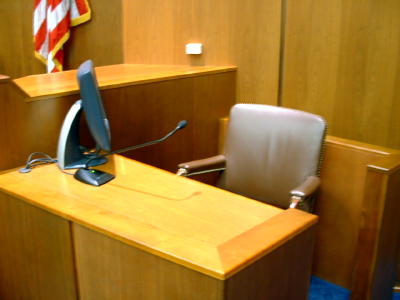
How should you prepare witnesses for trial? Could trial consultants help? This month's Washington State Bar News has an article discussing the issues:
Craig C. New, Samantha Schwartz, and Gary Giewat, Witness Preparation by Trial Consultants: Competitive Advantage or Invitation to Discoverability, Wash. St. B. News., May 2006.
One advantage is that the consultants may be able to help with aspects of the witness's communication style and demeanor that could affect the jury's impression. (I often have to remind myself to stop fidgeting when I speak -- and that's without the pressure of a trial!)
The authors are jury consultants, so the article is favorable, but they do mention criticisms and potential down sides.
New works for the Northwest firm Tsongas Litigation Consulting, Inc. Schwartz is a doctoral candidate, and New and Giewat already have Ph.D.s). Schwartz and Giewat are active in the national organization, American Society of Trial Consultants.
Filed in: witnesses, consultants, American-Society-of-Trial-Consultants, New, Schwartz, Giewat, Tsongas-Litigation-Consulting
Image from: http://www.miwd.uscourts.gov/COURTROOM%20TECH/Bell/witness_stand.htm.
Diocese Bankrupcty Records To Be Sealed?

The Roman Catholic Diocese of Spokane filed for bankruptcy (Dec. '04) due to some 175 sex abuse claims and now has moved to seal court records. The Spokesman Review opposes the motion and has requested the opportunity to look at claims against the diocese with the claimants' names deleted. U.S. Bankrupcty Judge Patricia Williams will hold a hearing on Monday. Newspaper Seeks Details of Abuse Claims, Seattle Times, May 11, 2006.
Two notes digressing from the question of press action to court records about current controversies --
Access to bankruptcy records generally has also been an issue, since personal bankruptcy filings contain very personal information, often material that could be used for identity theft. See Kristin A. Henderson, Lessons from Bankruptcy Court Public Records: A Conflict of Values for Law Librarians, 23 Legal Reference Services Quarterly 55 (numbers 2-3 2004).
A team of researchers has done very interesting empirical work on consumer bankruptcies in America using thousands of files from several jurisdictions (maintaining research protocols to protect privacy). See Teresa A. Sullivan, Elizabeth Warren & Jay Lawrence Westbrook, As We Forgive Our Debtors: Bankruptcy and Consumer Credit in America (1989); Teresa A. Sullivan, Elizabeth Warren, Jay Lawrence Westbrook, The Fragile Middle Class: Americans in Debt (2000); Elizabeth Warren & Amelia Warren Tyagi, The Two-Income Trap: Why Middle-Class Mothers and Fathers Are Going Broke (2003).
Filed in: news, Archdiocese-of-Spokane, sexual-offenses, sealed-records, press, bankruptcy, Williams, empirical-studies, books, Henderson, Sullivan, Westbrook, Warren
Wednesday, May 10, 2006
Tax Crime Trial Practice
This afternoon the UW Graduate Program in Taxation's class, "Tax Crimes: Investigations, Prosecutions, and Penalties," featured a panel discussion on prosecuting and defending a tax crime case. Prof. Nicole Chicoine generously invited others to visit the class. I took advantage of the opportunity and found the lively discussion very interesting.
The speakers included:
- Assistant U.S. Attorney Robert Westinghouse (senior litigation counsel in the U.S. Attorney's Office for the Western District of Washington)
- Defense Attorney Darrell Hallett, Chicoine & Hallett
- Defense Attorney Bob Chicoine, Chicoine & Hallett
- Defense Attorney Jim Frush, Cable, Langenbach, Kinerk & Bauer
Among them, these attorneys have over a hundred years of experience. Two of the attorneys now in private practice also worked for the government at some time -- one for the IRS and one as a special judge for the U.S. Tax Court. Quite a well-qualified panel!
A few observations:
- There are more layers of decision-making in tax prosecutions than in some other criminal prosecutions. An IRS special agent opens the file, investigates, and -- sometimes -- recommends prosecution. Then it all must be reviewed by the Department of Justice's Tax Division in DC. And then it goes to the local U.S. Attorney's office.
- Many of the cases turn on intent. Was the failure to file willful? Did the taxpayer intend to underreport income? (This differs from much other criminal practice where the key question is: Did this person do this deed?)
- Many defendants (and attorneys) face a "filing dilemma." Suppose the defendant is being investigated for failing to report the existence of offshore bank accounts. When the next April 15 comes around, should the taxpayer file and report the accounts? If so, then the information in the tax return could be used by investigators to turn up evidence about the past years. If not, then the fraudulent filing problem is compounded. (I suppose this sort of thing could come up in other contexts -- but not in a basic criminal case about a murder the defendant did or didn't commit at some point in the past.)
Filed in: tax, criminal-law, practice-of-law, UW, Chicoine, Frush, Hallett, Westinghouse, event, Capone
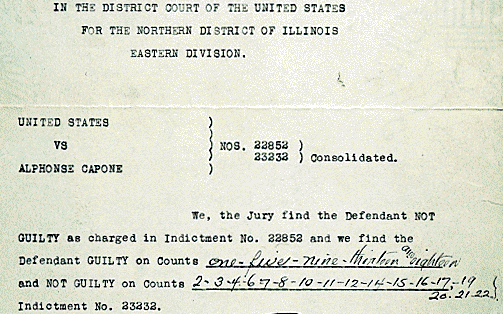
Image: Jury verdict in tax case against Al Capone. National Archives and Records Administration, http://www.archives.gov/exhibits/american_originals/capone.html
Tuesday, May 9, 2006
Senate Rejects Award Limits in Malpractice - New York Times
The Senate failed to move forward the Republicans' medical malpractice bills, S.22 and S.23. Senate Rejects Award Limits in Malpractice, New York Times, May 9, 2006.
Among other things, the bills would impose a limit on noneconomic damages. S.23 (the Healthy Mothers and Healthy Babies Access to Care Act) focuses on OB/GYN services; S.22 (the Medical Care Access protection Act of 2006 or MCAP Act) relates to health care liability generally.
See earlier post.
Filed in: legislation, med-mal, damage-caps
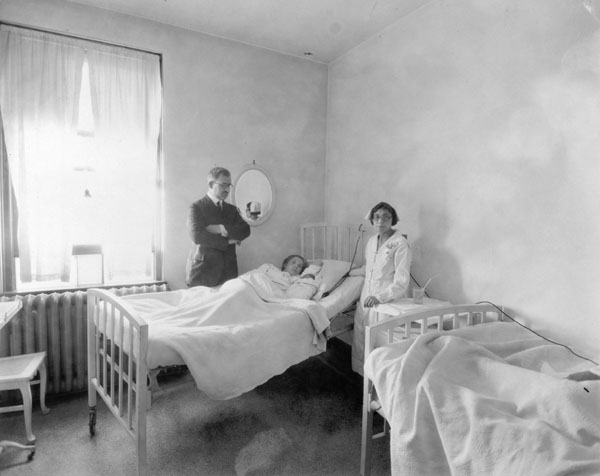
Image: "Community Hospital; Maternity Case," by an unknown photographer, Hutchinson, Minnesota, October 1924, National Archives and Records Administration, Records of the Bureau of Agricultural Economics (83-ML-10309), http://www.archives.gov/exhibits/picturing_the_century/greatwar/greatwar_img31.html
Monday, May 8, 2006
Football Walk-Ons Not a Class

Five men who played Division I-A football as walk-ons allege that the NCAA rule limiting schools to 85 football scholarships violates antitrust law -- and that, absent the rule, they would have received scholarships. They tried to have themselves designated as class representatives for a class of all I-A football walk-ons who practiced with their teams in the pre-season. Last week, Judge John Coughenour (W.D. Wash.) denied class certification. In Re NCAA I-A Walk-On Football Players Litigation, 2006 WL 1207915 (W.D. Wash. May 3, 2006), Westlaw.
Judge Coughenour walks the reader through the elements of class certification under Fed. R. Civ. P. 23(a) -- numerosity (check), commonality (check), typicality (check), and adequate representation (oops). The thing is, if the antitrust violation is shown, it is quite another matter to show that all the walk-on players from each Division I-A school would have gotten scholarships. And once you think that only some of them would have, then the members of the purported class would have interests at odds with one another.
Class certification also fails under FRCP 23(b) because "individual issues clearly predominate as to the element of damages" and class action treatment is an inferior means of handling the case.
Filed in: cases, class-actions, Coughenour, NCAA, sports
Image: Northwestern University football game, 1905. Source: SDN-004541, Chicago Daily News negatives collection, Chicago Historical Society, Library of Congress American Memory Project.
Friday, May 5, 2006
When Is a Motion in Limine Not?

After a tobacco company filed 11 motions in limine on the eve of trial of a wrongful death case, Judge James L. Robart (W.D. Wash.) was irritated -- and not by second-hand smoke. He thought that some of the motions were actually dispositive motions in disguise. What's the problem? It changes the calendar -- so that the motions were filed with much less notice to the other party and little time for the judge to consider them. Kimball ex rel. Kimball v. RJ Reynolds Tobacco Co., 2006 WL 1148506, No. C03-664 (W.D. Wash. April 26, 2006), Westlaw. Here is the pleading lesson Judge Robart gave the parties:
Mr. Kimball's two remaining claims have awaited trial for more than a year. Now, in the guise of “motions in limine,” RJR seeks to substantially pare those claims. The court has never before needed to remind a party that a motion in limine is substantially different than a dispositive motion. RJR's conduct, however, demands a different approach.The trial appears to be underway. I wasn't able to find any press coverage of it, but the court calendar shows it scheduled for Monday through Thursday next week.
A motion in limine is “[a] pretrial request that certain inadmissible evidence not be referred to or offered at trial.” Black's Law Dictionary, 1038 (8th Ed.2004). Some of RJR's motions meet this definition. At least half of them clearly do not. In this court, parties must generally file motions in limine a few weeks before trial, and they become ripe no later than two weeks after their filing. Dispositive motions, by contrast, are due at least 90 days before trial, and become ripe at least four weeks after their filing. The court's scheduling orders give it ample time to consider dispositive motions. The court's scheduling orders give it very little time to consider motions in limine.
Competent counsel represent RJR in this matter. The court assumes that counsel is aware of the differences between dispositive motions and motions in limine. The court is thus surprised and disappointed to find numerous dispositive motions pending only days before trial. RJR apparently believes that it can transform a motion for dispositive relief into a motion in limine simply by stating that once the court throws out the claim or theory that is the focus of the motion, the court should exclude evidence that is relevant to that claim or theory. Under this logic, RJR is free to ignore the deadline for dispositive motions and bring “motions in limine” at its leisure. The absurdity of RJR's position compounds when the court considers that RJR brought a motion in limine regarding its assumption of the risk defense in early November 2005 (Dkt.# 77). In that motion, RJR explained that it brought the motion early because “fundamental fairness” required that it know the scope of its defenses well in advance of trial. Apparently, the same “fundamental fairness” does not extend to efforts to dramatically pare Mr. Kimball's claims days before trial.
With a long-delayed trial set to begin in less than a week, the court declines to provide an analysis of each of RJR's dispositive requests. Instead, the court provides the following summary of the claims and defenses the jury will hear at trial. The summary includes only those defenses that are relevant to the disposition of the motions in limine. The court will conclude this order with summary dispositions of the parties' motions in limine along with RJR's thinly-veiled dispositive motions.
May 15 update: Here is a "case backgrounder" from R.J. Reynolds.
Filed in: cases, motions, in-limine, judges, Robart, tobacco
image from http://www.4girls.gov/substance/tobaccoquiz.htm.
Thursday, May 4, 2006
Origin of the Public Defender
Who came up with the idea idea for public defense? Stanford Law Professor says it was Clara Foltz, one of the first women lawyers in America. The abstract for her forthcoming article states:
Clara Foltz, one of the first women lawyers in the United States, was also the first to propose a public defender. Her radical idea that the state should provide a defense for those it accuses was born from Foltz's experiences as a jury lawyer facing unfair prosecutors, and from her involvement with other reform movements such as suffrage and populism. She marshaled creative constitutional arguments and a rights-based presumption of innocence in support of her conception.Barbara Allen Babcock, Inventing the Public Defender, Am. Crim. L. Rev. (forthcoming Oct. 2006). (The whole article may be downloaded free from SSRN.) Another hat tip to Robert J. Ambrogi.
Foltz's public defender was a capable jury lawyer, the equal of the public prosecutor in resources and respect. As actually enacted in the Progressive Era twenty years after Foltz first proposed it, the public defender was less concerned with individual advocacy than with more generalized fair process. The history of the public defender reveals the tension between the models of zealous advocate and responsible public official, a tension both present at the creation and perhaps inherent in the office itself.
Prof. Babcock is behind one of my favorite websites, the Stanford Women's Legal History Biography Project. There are dozens of biographies in addition to the series of articles Prof. Babcock has written on Clara Shortridge Foltz. UW folks might be especially interested in UW alumnae Lucile Lomen and Bella Weretnikow Rosenbaum.
Filed in: history, Foltz, Babcock, indigent-defense, biographies, Women's-Legal-History-Biography-Project, Lomen, Rosenbaum, Stanford
Scam Promised Legal Help to Prisoners
A felon named William L. Daniel had a website advertising the law firm of T.A. Brockington & Associates, with 36 years of experience representing prisoners fighting to regain their freedom. According to the Florida attorney general's office, which has filed a consumer protection lawsuit against him, Mr. Daniel took payments (from $1800 to $5500) from at least three families, promising to get prisoners' sentences reduced or set aside. Bogus law firm's web site spelled trouble for desperate prison inmates, South Florida Sun-Sentinel, May 3, 2006.
Hat tip to Robert J. Ambrogi.
Categories: practice-of-law, prisoners, access-to-justice, consumer-protection, Brockington, Daniel, Ambrogi
ACS Hosts Documentary
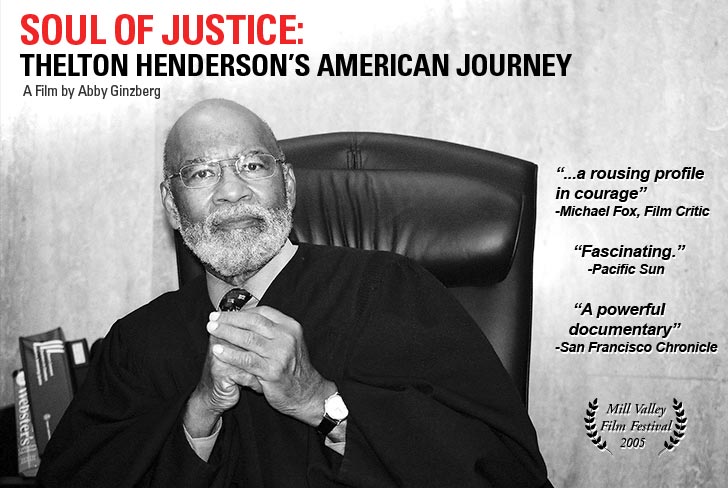
The Puget Sound chapter of the American Constitution Society is hosting Soul of Justice: Thelton Henderson's American Journey, Thursday, May 11, 5:30-8:00, at Seattle Public Library.
Judge Betty Fletcher (9th Cir.) will introduce the film, a documentary about Judge Thelton Henderson (N.D. Cal.). Filmmaker Abby Ginzberg, Judge Beverly Grant (Pierce County Superior Court), and Judge Michael Spearman (King County Superior Court) will also speak.
The film's website says:
SOUL OF JUSTICE: Thelton Henderson’s American Journey is a timely and unforgettable story about one person’s commitment to integrity and human rights and his profound influence on the American judicial system * * *.Filed in: American-Constitution-Society, judges, films, Henderson, Fletcher, Ginzberg, Grant, Spearman
As the first black attorney in the Civil Rights Division of the Kennedy Justice Department in the 1960’s, Henderson, fresh out of law school, confronted the intricate challenges of being a black man in authority within the largely all-white world of the American legal system. With rare and powerful archival footage SOUL OF JUSTICE offers viewers an intimate window into the world of the young lawyer as he grapples with tough choices, including the decision to loan a car to Dr. Martin Luther King, Jr., a crucial act which which ultimately cost him his job.
Beginning with his 1980 judicial appointment * * *, Henderson’s tenacity in seeing that his decisions are implemented has made him a uniquely effective and brave jurist * * *. From the inhumane conditions at Pelican Bay State Prison to the slaughter of dolphins by tuna-fishing fleets, to the elimination of affirmative action, SOUL OF JUSTICE reverberates with the heart-wrenching and dynamic issues that have placed Judge Henderson on the front lines throughout the last 25 years.
* * * At a time of increasing polarization over the actions of judges in America, this compelling cinematic journey reveals the true power of Thelton Henderson’s fearless efforts to see that justice retains its soul.
The Sedona Conference - Litigation Think Tank

The Sedona Conference is a nonprofit organization focusing on complex litigation, antitrust, and intellectual property. It offers high-end CLEs -- two-day programs, designed for small groups to be able to discuss the topics rather than sit back and listen to talking heads. (There's one today and tomorrow on litigation of mass torts; two in October will address patent litigation and antitrust law and litigatiion.)
The Sedona Conference also tries to develop the law through its Working Groups -- teams of lawyers and judges who work on focused topics, trying to develop guidelines in developing areas. Currently it has these working groups:
- WG1: Electronic Document Retention and Production
- WG2: Protective Orders, Confidentiality & Public Access
- WG3: The Role of Economics in Antitrust
- WG4: The Intersection of the Antitrust Laws and the Patent Law
- WG5: The Markman Process and Claim Construction
- WG6: International Electronic Information Management, Discovery and Disclosure
- WG7: Sedona Canada
- The Sedona Guidelines for Managing Information and Records in the Electronic Age (Sept. 2005 Version) (84-pages). These guidelines have already been influential and have been cited by courts. (I learned of the Sedona Conference from the speaker on e-discovery I heard yesterday.)
- "Summary of Washington Law" (05/2005) ("Washington State Authority Regarding Open Access to Court Proceedings and Records," by Lissa Shook of Davis Wright Tremaine). (Some of this memo is superseded by the changes to GR 15 and 22 in March.)
Wednesday, May 3, 2006
E-Discovery Resource
Interested in discovery issues related to data stored on servers and hard drives, in Blackberries and PDAs, and anywhere else electronic? Check out Electronic Discovery Law, a blog about e-discovery by the Document Analysis Technology Group at Preston Gates & Ellis LLP.
In addition to regular posts about new developments, the site includes a searchable Electronic Discovery Case Database.
I learned about the site this morning, when I heard a presentation by Julie Ann Halter, a partner in the Document Analysis Technology Group.
It's a complex field. Litigators take note: many courts are holding attorneys to a high standard -- e.g., being knowledgeable enough about clients' IT systems to manage document searches and making sure the clients retain documents once there's a reasonable likelihood of litigation.
In addition to the pending changes to the Federal Rules of Civil Procedure, you might want to be aware to the possibility of changes to Fed. R. Evid. 502, concerning the waiver of attorney-client privilege and protection of work product. Just last week, the Advisory Committee on the Federal Rules of Evidence conducted a hearing to discuss proposals. See post on Electronic Discovery Law.
I'm not an expert in e-discovery, but I picked up a good tip this morning: If you're under a court order to produce data from hard drives, do not run a program called "Evidence Eliminator." Use of Evidence Eliminator Results in Default Judgment Recommendation and Award of $145,811.75 in Expenses and Costs. (Losing the case and paying $145,800 would be bad enough -- but that extra $11.75 really lets you know you made a mistake.)
Filed in: electronic-discovery, blogs, cool-website, Preston-Gates-and-Ellis, Halter, rules, 502, attorney-client-privilege
Tuesday, May 2, 2006
Email Subscriptions
I've used Bloglet as the email subscription service for the blog for over a year. Unfortunately, it's stopped working and I haven't been able to troubleshoot the problem. It did a reasonable job for a while and it was free, but I have to move on.
Another service, FeedBlitz, is supposed to be much more reliable, so I've set that up. (Another advantage is that it doesn't send out draft posts to email subscribers, something I've always found annoying about Bloglet.)
If you want to subscribe by email (it's really convenient when it works!), see the link in the sidebar.
If you were a subscriber before, you should be carried over. You might want to take a look at the blog -- you probably missed about a week's worth of messages.
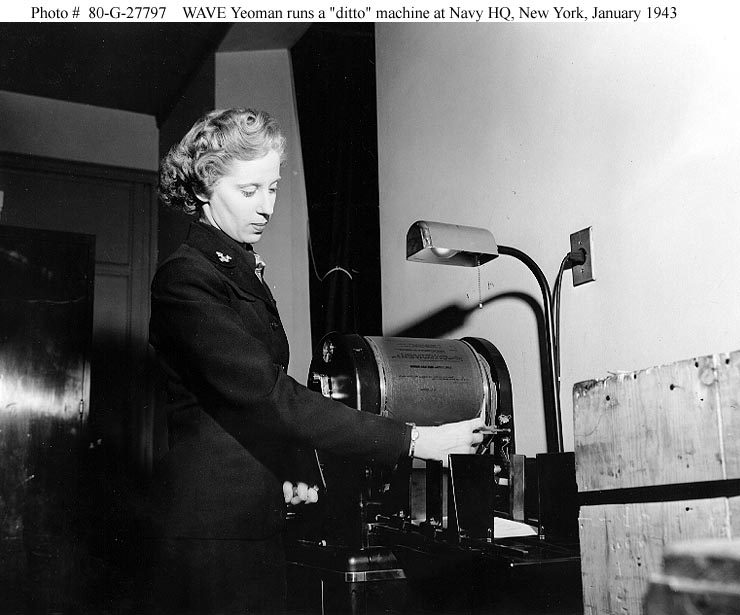
Technology gives us many opportunities, but it sometimes creates new frustrations as well. Even with a few glitches like this, though, a blog is still a much easier way to distribute information to a wide audience than, say, running off a bunch of dittos.
Filed in: notes-about-the-blog, email, Bloglet, FeedBlitz
Image from http://www.history.navy.mil/photos/images/g20000/g27797c.htm.
Monday, May 1, 2006
Commitment Upheld Over Frye and CR 35 Challenges
Before he was to be released from prison (having been convicted of rape and unlawful imprisonment), the state petitioned to have Michael Halgren involuntarily committed, under the Sexually Violent Predator Act (SVPA), RCW 71.09. The trial judge ordered the commitment, after a jury found beyond a reasonable doubt that he was a sexually violent predator; Division 1 affirmed; and, last month, the Washington Supreme Court affirmed. In re Detention of Halgren, --- P.3d ---, 2006 WL 975857 (April 13, 2006), Westlaw.
The appellant made these arguments: (1) use of a certain test to show his likelihood of reoffending violated the Frye standard of admissibility; (2) the trial court erred in refusing a requested unanimity instruction; (3) the court erred in compelling a CR 35 examination.
Writing for the majority, Justice Owens rejected each of these. First, the state's expert psychiatrist used the PPG (penile plethysmograph) as "one component among many in diagnosing Halgren as a sexual deviant." The test is not novel as a diagnostic tool. It was not used to show likelihood of reoffending.
The issue about the unanimity instruction relates to the definition:
"Sexually violent predator" means any person who has been convicted of or charged with a crime of sexual violence and who suffers from a mental abnormality or personality disorder which makes the person likely to engage in predatory acts of sexual violence if not confined in a secure facility.RCW 71.09.020(16)(emphasis added). Halgren's attorney requested an instruction that the jury must be unanimous in finding a "mental abnormality" or unanimous in finding a "personality disorder" rather than the "and/or" instruction the court gave. The Supreme Court said that the instruction given was fine. And there was sufficient evidence for a reasonable jury to have concluded beyond a reasonable doubt that Halgren had both a mental abnormality (paraphilia n.o.s. nonconsent) and an antisocial personality disorder.
The majority declined to address the CR 35 issue because the appellate record did not include proof that the trial court in fact ordered a CR 35 exam. Justice Sanders, in dissent, argued that it strained credulity to assume that Halgren had voluntarily submitted to the exam when he had vigorously opposed it. Justice Sanders would have reversed, based on In re Detention of Williams, 147 Wash.2d 476, 55 P.3d 597 (2002), which held that the the state may not administer CR 35 exams in the course of a civil commitment under the Sexually Violent Predator Act.
Filed under: cases, 703, 702, Frye, experts, PPG, sex-offenders, involuntary-commitment, SVPA, CR-35, Owens, Sanders
Friday, April 28, 2006
Blogging Prosecutor Scolded
A San Francisco associate on loan to the DA's office posted comments on his personal blog about a misdemeanor case he was handling. After the posts circulated around the DA's office, the temporary prosecutor resigned his assignment because "it was just not a comfortable environment to be in any more." Then the judge heard about it. Although he did not grant the defense motion to dismiss the case, the judge called the lawyer's conduct "juvenile, obnoxious and unprofessional." Law.com - Judge Reprimands Temp Prosecutor for Personal Blog.
The lawyer's remarks included calling defense counsel "chicken" for asking for a continuance, using some obscenities, and mentioning a prior conviction of the defendant's that had not been ruled admissible at trial.
None of [the lawyer's] blogging amounted to a constitutional violation of the defendant's rights, [Judge] Karnow concluded, because [he] wasn't trying to interfere with the defendant's relationship with his attorney and didn't actually end up doing so.
"The issue of intent is of central importance," Karnow wrote. "Such thoughts were far from mind: He sought only to celebrate himself, tout his prowess and to preen his own feathers, as it were, unconscious of other effect."
Filed under: blogs, practice-of-law, ethics, judges
Law.com - Attack Ads, Newspapers Heat Up Tort Reform War
The U.S. Chamber of Commerce has a vigorous campaign to change the tort system, and now ATLA is responding with a campaign of its own. The National Law Journal cites two ads -- the Chamber's picture of a man with cash stuffed into his mouth and the caption "Please Don't Feed the Trial Lawyers" versus ATLA's picture of a suit-jacketed torso with a gold "C.E.O." monogram on his shirt cuff slipping cash into his breast pocket and the caption "Haven't the Big Corporate CEO's Taken Enough?" Law.com - Attack Ads, Newspapers Heat Up Tort Reform War, Nat'l L.J., April 28, 2006.
Filed under: news, tort-reform, U.S.-Chamber-of-Commerce, ATLA
Life-Without-Parole Statutes' Effect on Death Penalty
Note, A Matter of Life and Death: The Effect of Life-Without-Parole Statutes on Capital Punishment, 119 Harv. L. Rev. 1838 (2006), looks at the history, policies, and impact of statutes creating a sentence of life without parole.
Some opponents of the death penalty have argued for these statutes, suggesting that juries will avoid imposing the death sentence if they know that the defendant will never be on the streets again. When death penalty statutes were invalidated, some prosecutors argued for the statutes as a second best.
Empirical studies indicate that the possibility of life without parole does affect jurors' decisionmaking. But author's analysis indicates that the presence of the statutes has affected the number of death sentences imposed but had very little effect on the number of executions. The author suggests that the people who get life without parole might have escaped the death penalty anyway -- either because of the jury or because of subsequent appeals, pardons, or other proceedings.
The author also reports that there has been a dramatic increase in the number of people being sentence to life without parole -- so that many defendants who would have been eligible for parole after, say, 40 years (when they are senior citizens) now will never be released.
For links to some other interesting death penalty information, see this post on the Sententcing Law and Policy blog.
Filed in: death-penalty, life-without-parole, sentencing, Sentencing-Law-and-Policy, empirical-studies, juries
GOP Leaders Plan Med Mal Reform
Senate Republican leaders plan to introduce a bill next week that would cap noneconomic damages in med mal cases but -- in an attempt at compromise -- the bill would not limit liability for drug companies and medical device manufacturers. BNA's Health Care Daily Report - GOP Leaders Planning to Drop Damage Caps
The bill will be S. 22 (the number has been saved for it). Leaders said they will also introduce a bill focused on liability of obstetricians and gynecologist.
A letter from Senate Majority Leader Bill Frist (April 21) outlines the GOP legislative plans, including health care. An op ed piece by Sen. Frist (April 28) argues for med mal reform.
For another view, see this April 27 press release from ATLA.
Filed in: legislation, med-mal, damage-caps, Frist, ATLA
Thursday, April 27, 2006
Recent Bar Incident Relates to Pending Case
On April 15 three men were shot at Mr. Lucky Lounge & Grill, a bar on Queen Anne Hill. This was not the first disturbance there, and the Liquor Control Board has logged various complaints: Bar, Where Three Were Shot, Logs 11 Complaints in Past Two Years, Seattle Times, April 18, 2006. In fact, trial ad instructor Karen Koehler is handling a wrongful death suit against the club on behalf of the family of a man who was killed in a parking lot there two years ago.
Filed in: news, wrongful-death, Koehler
Boeing Empl. Case Listed as Top Defense Win
A race discrimination case made the National Law Journal's list of the top ten defense wins of 2005. In Focus: Top Defense Wins of 2005, Nat'l L.J., April 17, 2006, at S3, S7, Westlaw link. In Williams v. The Boeing Co. (No. C98-761, W.D. Wash., Dec. 21, 2005), a class action involving about 4000 current and former black salaried workers, a jury found that the company had committed no acts of bias. The plaintiffs plan to appeal Judge Marsha Pechman's ruling that removed compensation issues from the jury.
The trial was the latest in a series of developments. A lawsuit over Boeing's employment practices was filed in 1998. Rev. Jesse Jackson helped negotiate a settlement the next year, valued at $15 million. Boeing agreed to alter its hiring and promotion practices (without saying its past practices were unlawful). But in 2003 that agreement was voided by the 9th Circuit because some class members objected to the distribution of funds.
Meanwhile, Boeing settled a sex discrimination case with a class of female employees for $72.5 million.
Before trial, the race discrimination class had been narrowed down, excluding hourly employees and workers from companies Boeing had acquired. About 11,000 black employees excluded from the class have filed a case in Chicago.
The lead defense counsel was Michael Reiss of Davis Wright Tremaine. (Although not currently on the Trial Ad faculty, Reiss was an instructor for many years.)
Reiss, Boeing's attorney, said that his winning technique at trial was to treat the plaintiffs with dignity and to use statistics to prove that they as a group fared as well as, if not better than, whites in securing promotions. Boeing's internal documents bolstered his claim that the company was committed to fair labor practices.
'It was with total respect, and it led the jury to conclude these are good people...but the evidence did not show discrimination against them,' said Reiss.
Filed in: cases, Boeing, employment-discrimination, class-actions, settlements, Reiss, Pechman, UW
Wednesday, April 26, 2006
How Law Libraries Can Help Lawyers
The author of MyShingle, an excellent blog about solo practice, invited me to write a guest post why lawyers should remember to use law libraries.
It's not strictly about trial practice, but I'll indulge myself by linking to it here. Law libraries are good resources -- and not just for the gazillion books on the shelves!
Filed in: law-libraries, legal-research, MyShingle
Legal Ethics Stories
Lawyers may face many moral dilemmas -- some covered by the formal rules of ethics and some not. Legal Ethics Stories is a new collection of essays looking at ten cases, exploring their contexts and the decisions the attorneys faced, often adding a postscript about subsequent developments. It is edited by Deborah L. Rhode and David J. Luban.
Not surprisingly, many of the stories involve litigation:
- David B. Wilkins, "Race, Ethics, and the First Amendment: Should a Black Lawyer Represent the Ku Klux Klan?" looks at the situation of the ACLU cooperating attorney who took on a pro bono case representing a Klan leader and subsequently lost his position as general counsel for the local NAACP.
- Stephen Gillers, "In the Pink Room," discusses the conviction and exoneration (after seven years in prison) of a substitute preschool teacher for child sexual abuse. The Bronx District Attorney's Office had failed to turn over to the defense documents that would have undercut the prosecution and, very likely, prevented conviction. Eventually -- 20 years after the man was wrongly accused -- the city offered a settlement of $5 million.
- Michael Mello, "United States v. Kaczynski: Representing the Unabomber," traces the relationship between Theodore Kaczynski and his court-appointed lawyers. Their persistent plans to present mental health evidence, despite his clear wishes, led to his guilty plea. The author assisted him in a motion to overturn the plea because of the bind he was put under -- denied the opportunity to get new counsel or represent himself, he had to accept portrayal as mentally ill or plead guilty. Writes Mello: "Most of what the public knows about the Unabomber case is wrong. But not for lack of media coverage." p. 141.
- In "Spaulding v. Zimmerman: Confidentiality and Its Exceptions," Roger C. Cramton looks at a case from the 1950s where defense counsel did not tell plaintiff about a life-threatening injury to maintain a strong negotiating position. "It is fashionable today to lament the decline of professional standards over time and to mourn the passing of a golden age of lawyering in which lawyers were more civil to each other and more public-spirited than in today's era of 'commercialism.' The facts of Spaulding suggest that in a number of important ways, things have gotten better rather than worse." p. 183.
- In "Bankrupt in Milwaukee: A Cautionary Tale," Milton C. Regan explores the influences on an ambitious young partner that could have led him to fail to disclose a conflict to a bankruptcy court -- a failure that landed him in prison.
- Alex Beam, in "Greed on Trial," discusses litigation over the $1.3 billion in fees sought by one of the firms that represented Massachusetts in the tobacco settlement.
The book is available in the library: KF306 .A4L43 2006 at Reference Area. Take a look -- for parts of one story or a bunch of them.
Filed in: books, ethics, cases, race, wrongful-convictions, prosecutorial-misconduct, discovery, Kaczynski, Unabomber, Spaulding-v-Zimmerman, conflicts-of-interest, attorney's-fees, tobacco, attorney-client-privilege, Rhode, Luban, Wilkins, Gillers, Mello, Cramton, Regan, Bean
Wednesday, April 19, 2006
An Easy Way to Fix a Leading Question
You want to fix your leading questions don't you? But you're sometimes baffled, right?
Here are some tips from Evan Schaeffer: The Illinois Trial Practice Weblog: An Easy Way to Fix a Leading Question. (Read the comments, too -- there's another tip there.)
Filed in: tips, direct-examination, leading-questions, Schaeffer, Illinois-Trial-Practice-Weblog
Judges on Blogs
Third-year law student Ian Best has been blogging mightily this semester, examining the phenomenon of legal blogging in his own blog, 3L Epiphany. Recently he posted a list of cases that cite blogs and then followed that up by posing questions to the judges. Interviews with two judges are posted: Justice Judith Lanzinger of the Ohio Supreme Court and Judge Richard Kopf (federal district court, Nebraska).
My guess is that legal blogs will partially fill the “practicality” gap between the legal academy and the rest of us. Blogs provide a unique opportunity for law teachers to directly influence the development of the law in near real time. Doug Berman [co-owner of Sentencing Law and Policy blog], and other legal academics like him, have already done so. They deserve great credit. -- Judge KopfJudge Kopf also comments on the change that electronic filing has made in federal courts and speculates about other changes that may come -- for instance, digital recordings (transcribed elsewhere rather than by court reporters) and testimony via interactive video.
Filed in: blogs, judges, Kopf, Lanziger, Best, 3L-Epiphany, Berman, Sentencing-Law-and-Policy, technology
Sunday, April 16, 2006
Defamation Suit Over Paragraph in Freakonomics
John R. Lott, Jr., the author of More Guns, Less Crime: Understanding Crime and Gun-Control Laws is suing a Steven D. Levitt, coauthor of Freakonomics, for defamation. Lawsuit Accuses Best-Selling Economics Professor of Defamation in 'Freakonomics', Chronicle of Higher Education, April 13, 2006. [This link should work for people using UW computers or others with subscriptions to the Chronicle For five days, others can see the article here.]
In describing Mr. Lott's work on statistical relationships between crime rates and laws on firearms ownership, Mr. Levitt and Mr. Dubner write that "when other scholars have tried to replicate [Lott's] results, they found that right-to-carry laws simply don't bring down crime."A copy of the complaint is at Overlawyered.com, which also has some discussion.
Mr. Lott says in his lawsuit that the book's assertion is false, adding that "there are no published articles in which an economist or other researcher has attempted to replicate Lott's results and concluded that 'right-to-carry laws simply don't bring down crime.' In fact, every time that an economist or other researcher has replicated Lott's research, he or she has confirmed Lott's conclusion."
The lawsuit also alleges that "neither of two articles relied on by Levitt and Dubner" in the accompanying endnote "states or concludes that they have been unable to 'replicate Lott's results."
Thanks to the reader who sent me the story.
Filed in: news, Lott, Levitt, defamation, firearms, Overlawyered, empirical-studies
Friday, April 14, 2006
On American Soil

On American Soil: How Justice Became a Casualty of World War II tells the story -- or stories -- of a violent incident at Fort Lawton and the ensuing investigation and court martial. Jack Hamann, a journalist and documentary filmmaker, has written a gripping, thought-provoking tale, exploring issues of race, war, justice, and military bureaucracy. His description of the book from his website:
On a hot August night in 1944, a terrified Italian prisoner of war was lynched at a sprawling US Army fort in Seattle.I heard Mr. Hamann speak at the Innocence Project conference last month and immediately went out and got the book. It really is this good.
After a tumultuous two-month criminal investigation, the Army charged three U.S. soldiers with murder and forty others with rioting.
All forty-three were African Americans.
What followed was the largest and longest Army court-martial of World War II, and the only trial in American history where black men stood accused of a mob lynching. The Army prosecutor was Leon Jaworski, later of Watergate fame. The entire true story is an engrossing tale of pride, power, duplicity and redemption.
Some Seattleites may not even know about Fort Lawton, which was a big, active military base during World War II. It was where Discovery Park is today. See maps and pictures.
 A UW connection is that the lead defense attorney, Major William Beeks, was a UW law grad. When he was twenty-four, he wanted to go to sea in the merchant marines, but his wife persuaded him to stay in Seattle, where he attended law school and became a maritime lawyer. He joined the Army after the U.S. entered World War II. After the War, he joined Jaworski in Germany prosecuting war crimes. He was a district court judge (Western District of Washington) from 1961 until his death in 1988.
More information about the book is here. It's available in the library: D805.5.F66 H36 2005 at Classified Stacks.
Moved by the story, Rep. Jim McDermott introduced H.R. 3174, to direct the Secretary of the Army to review the cases of the 28 men who were convicted. The bill now has a few dozen cosponsors.
This has nothing to do with trial advocacy, but I note that Mr. Hamann is currently working on "Generation IX", a documentary about the national champion UW women's volleyball team and its upcoming trip to China. Something to watch for!
Filed in: books, courts-martial, forensics, history, race, prisoners-of-war, World-War-II, Fort-Lawton, Jaworski, Beeks, McDermott, legislation, Hamann, UW, Innocence-Project, judges, sports
Coffee Update
Ten students have responded to my offer of free drinks from Law School Espresso.
The offer was for just ten students, but I'm having fun meeting them and my Husky Card has a good balance, so I'll extend it to ten more.
Being a blogger sometimes takes flexibility, so I have also adjusted the offer to be: a drink or any other smallish thing. (A student who doesn't drink coffee enjoyed a cookie. You could have a muffin or bag of carrots or a yogurt, if you don't want a drink.)
Filed in: coffee, notes-about-the-blog
Westlaw for KC Inmates
Inmates in the King County Jail who are representing themselves now have access to Westlaw. Self defense just got easier for inmates, Seattle Times, April 14, 2006.
Pro se inmates can get up to four hours a week of computer time, system training and unlimited online access to state and federal court cases, statutes, legal opinions, periodicals and free telephone support.
Currently there is one terminal in the King County Correctional Facility (Seattle) and one in the Regional Justice Center (Kent), with plans to install more computers.
Administrators say that pro se defense has been on the rise. Generally there are 20-25 pro se inmates in the system at any time. The King County Office of the Public Defender provides support to pro se defendants, including legal research and investigators.The state is obligated to provide access to legal information to inmates proceeding pro se:
[A]rticle I, section 22 [of the Washington Constitution] affords a pretrial detainee who has exercised his constitutional right to represent himself, a right of reasonable access to state provided resources that will enable him to prepare a meaningful pro se defense. What measures are necessary or appropriate to constitute reasonable access lies within the sound discretion of the trial court after consideration of all the circumstances, including, but not limited to, the nature of the charge, the complexity of the issues involved, the need for investigative services, the orderly administration of justice, the fair allocation of judicial resources (i.e., an accused is not entitled to greater resources than he would otherwise receive if he were represented by appointed counsel), legitimate safety and security concerns, and the conduct of the accused.State v. Silva, 107 Wash. App. 605, 622-23, 27 P.3d 663, 674-75 (Div. 1 2001), Westlaw, legalwa.org (footnotes omitted). Although the defendant in Silva did not have physical access to a law library, he had access to legal materials by requesting them from the librarian and, in that case, Division 1 found that access to be adequate.
Filed in: King-County, legal-research, pro-se, indigent-defense, Westlaw
Thursday, April 13, 2006
Researching Judicial Clerkship Opportunities
Thinking about clerking or externing for a judge? Take a look at our new guide, Researching Judicial Clerkship Opportunities.
Filed in: legal-research, judges, judicial-clerkships, tips
Donations for Lighter Charges Under Scrutiny in Kennewick
The FBI is investigating a practice in Benton County District Court where the prosecutor would reduce charges if the defendant made a donation to a charity the prosecutors named (an after-school program for at-risk teens). Meanwhile, WSBA is investigating potential ethical violations by two key attorneys (a prosecutor and a defense attorney). Defendants got off the hook if they donated to charity, Seattle Times, April 13, 2006. About $18,000 in donations is unaccounted for, including one $5,000 donation from a DUI dismissal.
Seattle City Attorney Tom Carr says that his office does not have a similar practice. Russ Hauge, the Kitsap County Prosecutor, says that he sometimes has a DUI defendant make a donation to Mothers Against Drunk Driving -- but only as part of a package that includes alcohol treatment and other penalties.
Filed in: news, plea-bargains, DUI, Carr, Hauge, Benton-County, WSBA, FBI, ethics
Wednesday, April 12, 2006
Go Ahead, Cite Unpublished Opinions
Today the Supreme Court approved new Rule 32.1 of the Federal Rules of Appellate Procedure, which allows citation of unpublished opinions in all federal courts. (Actually, it prohibits courts from banning the citation. Same result.) Courts may still decide not to accord the opinions much precedential weight.
The rule becomes effective December 1, unless Congress votes to block it.
Legal Times quoted two contrasting views:
"This change will facilitate lawyers' representation of their clients, and it will facilitate the courts' informed decision of future cases," said Mark Levy of Kilpatrick Stockton, a member of an advisory committee that recommended the change. "It will also bring national uniformity to the process."Tony Mauro, Supreme Court Votes to Allow Citation to Unpublished Opinions in Federal Courts, Legal Times, April 12, 2006.
At one point in the debate, 9th Circuit Judge Alex Kozinski, the leading opponent of the rule change, said unpublished opinions were so designated for a reason: They are drafted "entirely" by law clerks and staff attorneys. He added, "When the people making the sausage tell you it's not safe for human consumption, it seems strange indeed to have a committee in Washington tell people to go ahead and eat it anyway."
Filed in: rules, SupremeCourt, unpublished-opinions, FRAP-32.1, Kozinski, Levy
Changes to Federal Rules of Evidence
The Supreme Court today voted to approve some changes to the Federal Rules of Evidence. The changes will become effective December 1, unless Congress votes first to block the changes.
Here's the summary from USCourts.gov, which links to the text of the amendments.
- Evidence Rule 404 (Character Evidence Not Admissible to Prove Conduct; Exceptions; Other Crimes) (clarifies that evidence of a person's character is never admissible to prove conduct in a civil case)
- Evidence Rule 408 (Compromise and Offers to Compromise) (resolves conflicts in caselaw about statements and offers made during settlement negotiations admitted as evidence of fault or used for impeachment purposes).
- Evidence Rule 606 (Competency of Juror as Witness) (clarifies that juror testimony may be received only for very limited purposes, including to prove that the verdict reported was the result of a clerical mistake)
- Evidence Rule 609 (Impeachment by Evidence of Conviction of Crime) (permits automatic impeachment only when an element of the crime requires proof of deceit or if the underlying act of deceit readily can be determined from information such as the charging instrument)
New Civil Rules for E-Discovery
The Supreme Court today voted on a number of changes to court rules. Most will take effect December 1, unless Congress first votes to block the change.
Several changes to the Federal Rules of Civil Procedure concern electronic discovery. Quoting from the summary on USCourts.gov (which includes links to the text):
- Civil Rule 16 (Pretrial Conferences; Scheduling; Management) (establishes process for the parties and court to address early issues pertaining to the disclosure and discovery of electronic information)
- Civil Rule 26 (General Provisions Governing Discovery; Duty of Disclosure) (requires parties to discuss during the discovery-planning conference issues relating to the disclosure and discovery of electronically stored information)
- Civil Rule 33 (Interrogatories to Parties) (expressly provides that an answer to an interrogatory involving review of business records should involve a search of electronically stored information)
- Civil Rule 34 (Production of Documents and Things and Entry Upon Land for Inspection and Other Purposes) (distinguishes between electronically stored information and "documents")
- Civil Rule 37 (Failure to Make Disclosure or Cooperate in Discovery; Sanctions) (creates a "safe harbor" that protects a party from sanctions for failing to provide electronically stored information lost because of the routine operation of the party's computer system)
- Civil Rule 45 (Subpoena) (technical amendments that conform to other proposed amendments regarding discovery of electronically stored information)
Free Coffee Update
Two of the free drinks have been claimed (one hot chocolate with whipped cream, one double tall latte with a shot of hazelnut syrup). Eight are still available!
Coincidentally, the first two students to contact me subscribe to Trial Ad Notes via email -- a very convenient way to have the information delivered. You can skim, skip, delete, or read, as you wish. To sign up, just fill in one of the yellow boxes in the sidebar.
Filed in: coffee, notes-about-the-blog
Exercises for Judges to Counter Unconscious Bias
Evan R. Seamone, an Army trial lawyer, proposes that judges use some exercises -- using theories from the disciplines of clinical psychology, drama, creative thinking, and critical thinking -- to become of and address possible sources of bias. Understanding the Person Beneath the Robe: Practical Methods for Neutralizing Harmful Judicial Biases, 42 Willamette L. Rev. 1 (2006), LexisNexis, Westlaw. (Sorry, the latest issue on the Willamette Law Review's website is volume 40.) The article began as a presentation to the Ohio Judicial College in 2003.
Mr. Seamone concludes:
The maxim for judges to know themselves applies to every decision where behavioral influences can negatively interfere with the judge's thinking process. While most cases afford the judge little room for the exercise of discretion, not all cases are easily decided. Judicial discretion can surface based on an alteration of one small fact in a case. Faced with discretion, judges must have tools on hand to guarantee the integrity of their decision-making. As one noted judge observes, 'A basic condition of the reasonable exercise of judicial discretion is awareness of the existence and exercise of judicial discretion.'Id. at 75-76.
Judicial mindfulness presents a set of hands-on techniques to help judges determine precisely how they are influenced by their memories, emotions, and initial perceptions. These techniques overcome the pitfalls of many existing judicial debiasing methods, such as common checklists, by relying upon the judge's intuition and abandoning the notion that all judges think in the same predictable manner. It is possible to approach subconscious impulses mainly because the techniques all draw on a judge's own subjective feelings and experiences. Judicial mindfulness encourages judges to act well outside of their comfort zones in order to discover hidden truths about themselves. While many methods exist to accomplish greater self-insight, the starting point for judicial mindfulness rests in the proven techniques of meditating, focusing, psychodrama, journaling, and cognitive therapy. This beginning framework for self-awareness can be supplemented by other methods at any time.
Of course, there's nothing in the exercises that limits them to those who serve on the bench. And behavioral influences can negative interfere with anyone's thinking process.
Filed in: judges, bias, psychology, empirical-studies, Seamone
Korea Plans Online Trials
Futurelawyer links to an article from The Korea Times reporting on a Korean court experiment to conduct some trials via court-run blogs. The Korea Times : Courts Test Internet Trials - Trial by Blog?. Futurelawyer (Richard A. Georges) says he'd love to file motions and pleadings and to make oral argument in his blog.
Filed in: Korea, technology, blogs, Futurelawyer, Georges
Tuesday, April 11, 2006
Washington Supreme Court Upholds Death Penalty
Last week the Washington Supreme Court upheld a death sentence over a challenge that it was not proportional, given that Gary Ridgway (the so-called Green River Killer) was not given the death penalty after pleading guilty to 48 counts of murder. Death Sentence Upheld in Triple Murder, Seattle Times, March 31, 2006.
The case, State v. Cross, was narrowly decided. Justice Chambers wrote the majority opinion, in which Justices Ireland, Bridge, Alexander, and Fairhurst joined. Justice Alexander also wrote a brief concurring opinion. Justice Charles Johnson wrote a dissent, joined by Justices Madsen, Sanders, and Owens.
Cross raised several arguments on appeal, including alleged errors in jury selection, absence of a premeditation instruction, ineffective assistance of counsel, and the constitutionality of the death penalty.
On the death penalty issue, Justice Chambers wrote:
Justice Johnson wrote:Since Cross's trial, the Green River Killer, Gary Ridgway, was caught, prosecuted, and sentenced to life in prison. We cannot begin to calculate the harm his abhorrent murders caused. The fact he will live out his life in prison instead of facing the death penalty has caused many in our community to seriously question whether the death penalty can, in fairness, be proportional when applied to any other defendant.
We do not minimize the importance of this moral question. But it is a question best left to the people and to their elected representatives in the legislature. Under the United States Constitution (the only constitution plead [sic] here), Washington's death penalty is constitutional and nothing about Gary Ridgway changes that.
It may be that there will always be aberrations like Ridgway. We do not believe that these horrific aberrations make a statute unconstitutional. We look at the entirety of first degree aggravated murder prosecutions, not just at whether any particular case is within an order of magnitude of the worst we have known.We do not agree with those who say that no rational explanation exists for Gary Ridgway escaping a death sentence and Dayva Cross not. See generally Matthew R. Wilmot, Note, Sparing Gary Ridgway: The Demise of the Death Penalty in Washington State? 41 Willamette L. Rev. 435 (2005). Ridgway was spared because a highly respected, honorable, and thoughtful prosecutor made the decision to stay the hand of the executioner in return for information that would otherwise have died some midnight within the walls of the state penitentiary. The information received in return for a life sentence allowed so many families to, at long last, know what happened to their loved ones. While many may disagree with that prosecutor's decision, no one should deny that it was highly rational.
The majority abandons any rational attempt to fulfill our statutory responsibility to conduct a proportionality review, effectively rendering the statutory duty meaningless. Properly recognizing and analyzing what has happened in the administration of capital cases in this state inevitably leads to the conclusion that the sentence of death in this case, and generally, is disproportionate to the sentences imposed in similar cases. Contrary to what we had expected to find when we established an analytical framework to conduct our statutory review, that the worst of the worst offenders would be subject to the death penalty, what has happened is the worst offenders escape death. When Gary Ridgway, the worst mass murderer in this state's history, escapes the death penalty, serious flaws become apparent. The Ridgway case does not "stand alone," as characterized by the majority, but instead is symptomatic of a system where all mass murderers have, to date, escaped the death penalty.The dissent goes on to discuss other mass murderers in the state who have escaped the death penalty. Only four people convicted of aggravated murder in the first degree have been convicted and executed. Three chose not to exhaust their appeals. Another person sentenced to death committed suicide. There have been some 268 convictions for first degree aggravated murder.
The Seattle Times editorialized:
The state doesn't have to have [the death penalty], or to use it, but the state can.The Proper Role of State's Death Penalty, Seattle Times, April 3, 2006. The P-I agreed that "Ridgway's was a unique case," noting that the "P-I Editorial Board has failed to reach a consensus on the death penalty issue itself." Death Penalty: Goal Is Justice, Seattle P-I, April 4, 2006.
We think it should, but only for the most heinous of crimes, and in cases for which there is no doubt of guilt. If, under that standard, Washington has only four executions in 15 years, that is acceptable.
The question in this case is whether to have a death penalty at all. And that question, Chambers wisely wrote, "is a question best left to the people and to their elected representatives in the Legislature."
Filed in: cases, death-penalty, Ridgway, Chambers, Alexander, Johnson-C
Monday, April 10, 2006
Free Coffee!

Free Coffee!
I will buy a drink (not just coffee -- any drink available at Law School Espresso) for each of the first 10 UW law students to contact me and mention this blog. Send me an email message (whisner@u) or talk to me when you see me. Offer also good if you see me at the Book Store Cafe.
Filed in: notes-about-the-blog, coffee
Thursday, April 6, 2006
Reverse CSI Effect?
A Connecticut civil rights lawyer (Norm Pattis) suggests the most likely effect of CSI's popularity is that "jurors love scientific evidence, even if the prosecutor presents it poorly." Crime & Federalism: Reverse CSI Effect? This a bit different from the observation by some prosecutors that CSI's effect is to make jurors less likely to convict without dazzling scientific evidence. (I suppose both positions could have some merit -- that jurors are less likely to convict with NO scientific evidence, but more likely to convict if there's ANY.)
Filed in: CSI, juries
Are Contingency Fees Fair?
Are Contingency Fees Fair to Consumers? is a post in Law.com's Legal Blog Watch. The author summarizes posts by David Giacalone, who argues that personal injury lawyers are profiting at the expense of the consumers they represent. It also links to a long response by Jonathan Stein at The Practice taking the opposite position.
Filed in: contingency-fees, attorney's-fees, giacalone, stein
Wednesday, April 5, 2006
Upcoming Conferences in Washington
Coming soon:
- 2006 Washington State Access to Justice Conference, June 9-11, 2006, Red Lion Yakima Center Hotel. This is sponsored by WSBA's Access to Justice Board. (Among other things, participants will have the opportunity to discuss Anne Fadiman's excellent book, The Spirit Catches You and You Fall Down, about the cultural disconnect between California medical professionals and a Hmong family whose child has epilepsy.) Law student registration is $40.
- 2006 Washington State Bar Association Bar Leaders Conference, Access to the WSBA: Serving All 25,754 Bar Leader Members, June 9-11, 2006, Yakima Convention Center & Red Lion Yakima Center Hotel. This conference is for the leadership and leadership-to-be of various bar associations (e.g., county, minority, and specialty bar associations).(The overlap with the Access to Justice Conference isn't coincidental. Organizers encourage participants in the two conferences to visit both.)
- Getting Ahead & Giving Back: Diversity in Washington's Legal Community, Seattle University, June 2, 2006 (reception the evening of June 1). The first annual conference on diversity in the legal profession, this meeting is sponsored by a coalition of minority bar associations. Law student registration is $25.